
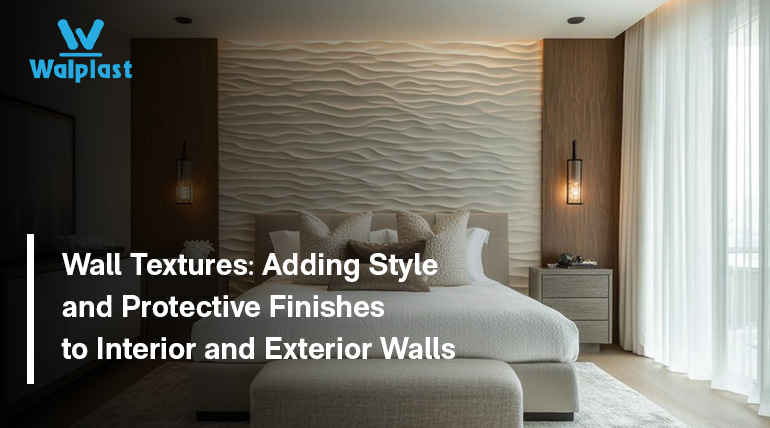
Walls are now considered more than just surfaces that require painting. They can develop into a significant design feature that gives a room the personality, depth, and visual appeal with the correct wall texture. Textured walls may completely change a building’s appearance, from delicate patterns in modern residences to striking finishes on external facades.
But picking a wall texture involves more than just picking a visually appealing design. It is also necessary to take into account the kind of material, surface condition, application location, and weather exposure. Homeowners, architects, and contractors can create a finish that is both aesthetically pleasing and long-lasting by being aware of these characteristics.
A Wall Texture: What Is It?
A decorative finish that is applied to a prepared wall surface to produce a unique pattern or tactile effect is called a wall texture. In contrast to a
traditional flat paint finish, texture adds depth and character through patterns like swirls, rainfall effects, vertical lines, and horizontal grooves.
You can use wall textures for:
• Give plain walls some visual appeal
• Make architectural highlights and accent walls.
• Enhance motifs of classic or modern design
• Aid in hiding small surface imperfections
• Give the underlying plaster an extra layer of protection.
Texture can lessen the visibility of small flaws, but it shouldn’t be applied on unstable plaster, active seepage, or structural fissures. Prior to application, such issues must be appropriately fixed.
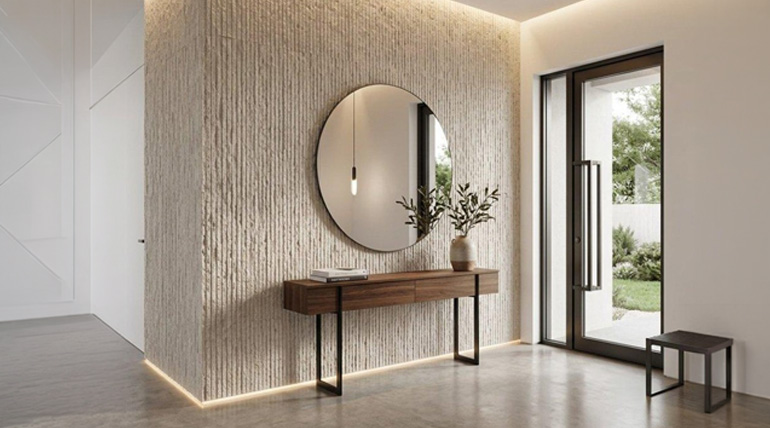
Interior Wall Textures: Adding Character to Every Space
Interior wall textures can change the character of a room without requiring major structural alterations. Depending on the pattern and colour selected, they can create a finish that appears subtle, natural, elegant or dramatic.
Textures are commonly used on:
• Living-room feature walls
• Bedroom accent walls
• Entrance passages and foyers
• Staircases and corridors
• Reception and waiting areas
• Restaurants, hotels and retail spaces
The size and lighting of the room should guide the selection. Fine textures and lighter colours can maintain an open, understated appearance, while deeper patterns can create a stronger focal point. Lighting also plays an important role, as shadows falling across a textured surface make its depth and pattern more prominent.
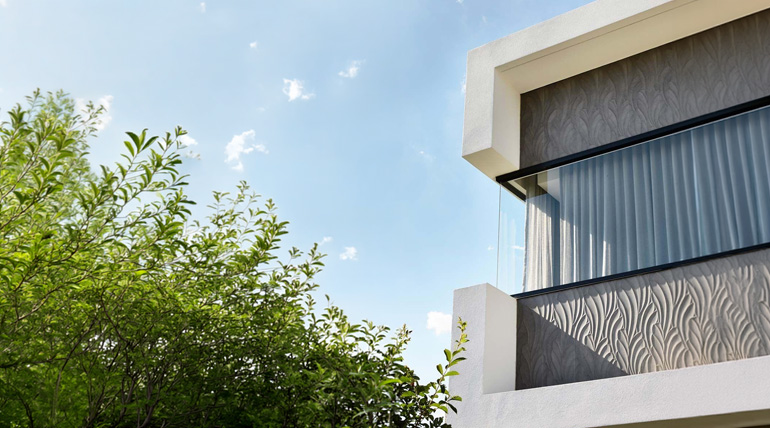
Exterior Wall Textures: Combining Design with Durability
Exterior walls remain exposed to sunlight, dust, wind, rain and changing weather conditions. Their finish must therefore offer more than visual appeal.
A suitable exterior wall texture can enhance the building’s façade while helping protect the underlying plaster. It can be applied to entire elevations or used selectively around balconies, entrance sections, columns and architectural bands.
The selected product must be suitable for exterior application and compatible with the substrate. The wall must also be structurally sound and free from continuous dampness or seepage before work begins.
Acrylic and Cement-Based Wall Textures
Wall textures are available in different formulations. Acrylic and cement-based textures are two widely used options, and each offers distinct advantages.
Acrylic Wall Texture
Acrylic wall texture is a synthetic textured finish formulated using an acrylic binder and selected aggregates. It is generally supplied in a ready-to-use form and applied with a trowel.
It is suitable for creating decorative patterns on interior as well as exterior walls. Depending on the application technique, finishes such as horizontal, vertical, swirl and rainfall patterns can be created.
Acrylic texture is a practical choice when the project requires:
• A decorative textured finish
• Application on interior or exterior walls
• Multiple pattern possibilities
• Good workability
• UV and algae resistance
• A tough, low-maintenance surface
HomeSure ScratchEx Acrylic Texture is a durable Scratch Plaster Acrylic Texture, formulated with modified acrylic emulsion and marble texturising sand. It offers a matt finish when dry and is intended to provide decoration as well as long-term surface protection. The product is available in 25 kg and 30 kg packs.
Cement-Based Wall Texture
Cement-based texture is a dry, powder-form wall finish containing minerals, white cement and polymers. It is mixed with the recommended quantity of clean water at the site before application.
Its compatibility with plaster and concrete surfaces makes it suitable for a range of interior and exterior applications. It also offers an economical way to create decorative patterns across larger areas.
A cement-based texture may be considered when the project requires:
• Compatibility with plaster and concrete surfaces
• A tough decorative finish
• Good bonding with the base plaster
• Resistance to fungal and algal growth
• A durable and cost-effective solution
• No water curing after application
HomeSure ScratchEx Cement-Based Texture is a polymer-modified wall finish designed to decorate and protect interior and exterior walls. It is supplied in a 30 kg pack and can be applied with a plastic or fibre trowel to create the required pattern.
Acrylic Texture vs Cement-Based Texture
| Factor | Acrylic Texture | Cement-Based Texture |
| Form | Ready-to-use viscous material | Dry powder mixed with water |
| Composition | Modified acrylic emulsion and marble texturising sand | Minerals, white cement and polymers |
| Application | Applied using a trowel | Mixed with water and applied using a trowel |
| Suitable areas | Interior and exterior walls | Interior and exterior walls |
| Key advantage | Decorative versatility and weather resistance | Cost-effective and compatible with plaster and concrete |
The final selection should be based on the substrate, required finish, exposure conditions, project budget and product specifications rather than appearance alone.
How to Choose the Right Wall Texture
1. Consider the location
Determine whether the texture will be applied indoors or outdoors. Exterior surfaces need products suitable for prolonged exposure to weather, while interior selection may focus more heavily on colour, pattern and design compatibility.
2. Examine the substrate
Check whether the surface is plaster, concrete or a previously finished wall. The texture must be compatible with the substrate and applied only after proper preparation.
3. Select the pattern carefully
Fine patterns generally create a subtle finish, while deeper grooves produce a more pronounced visual effect. It is advisable to prepare a sample panel before covering the entire wall.
4. Study the lighting
Natural and artificial light can significantly change the appearance of a textured wall. Review the sample under actual site lighting before finalising the design.
5. Consider maintenance
The location and likelihood of dust accumulation should be considered when selecting the depth of the pattern. Exterior and high-traffic surfaces may require periodic cleaning to retain their appearance.
Surface Preparation Is Essential
Even a high-quality wall texture cannot perform effectively on a weak, dirty or damp substrate. Correct surface preparation helps achieve proper adhesion, uniform application and a more durable finish.
Before applying wall texture:
• Remove dust, grease, loose plaster and other contaminants.
• Repair defective or unstable areas. For exterior walls repair the defect with Crack Filler for Exterior Walls.
• Address cracks, leakage, seepage and continuous dampness.
• Allow new masonry or plaster to cure for the recommended period.
• Ensure the surface is reasonably level and structurally sound.
• Apply the recommended primer wherever specified.
• Follow the stated mixing ratio, thinning limit and application method.
HomeSure ScratchEx Acrylic Texture should not be applied to surfaces exposed to continuous seepage or dampness. For its cement-based texture, the product must be added to the recommended quantity of water—not the other way around—and mixed into a homogeneous, lump-free paste. Applicators should always refer to the current product packaging and technical data sheet before beginning work.
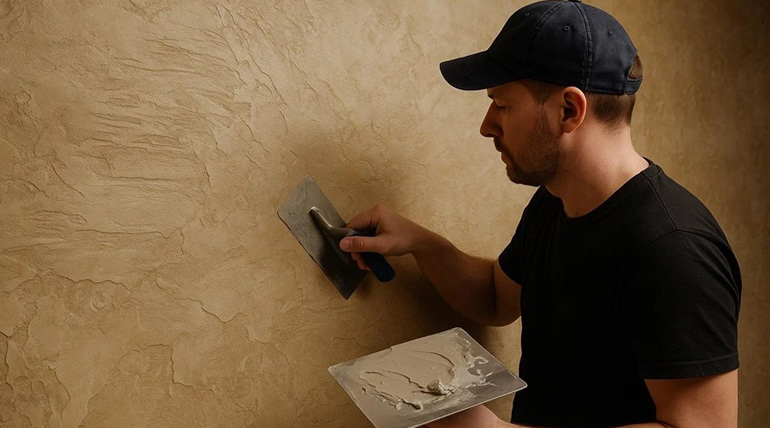
Why Professional Application Matters
The final texture pattern depends considerably on the applicator’s technique. Trowel pressure, direction of movement, material consistency and working time can all influence the outcome.
A trained applicator can help maintain:
• Consistency across larger wall areas
• Uniform pattern depth and direction
• Clean junctions around doors, windows and corners
• Correct material mixing and application
• Better coordination between texture, primer and topcoat systems
Preparing and approving a sample panel before full-scale application can prevent differences in expectations and help establish a reference for the desired finish.
Give Every Wall a Distinctive Identity
The right wall texture can turn an ordinary surface into an expressive design feature while supporting long-term wall protection. Acrylic textures offer decorative versatility and a ready-to-use solution, while cement-based textures provide a durable and economical option compatible with plaster and concrete surfaces.
The HomeSure ScratchEx range includes acrylic and cement-based textures developed for interior and exterior applications. With the right product selection, thorough surface preparation and skilled application, walls can achieve a finish that combines style, depth and lasting performance.