
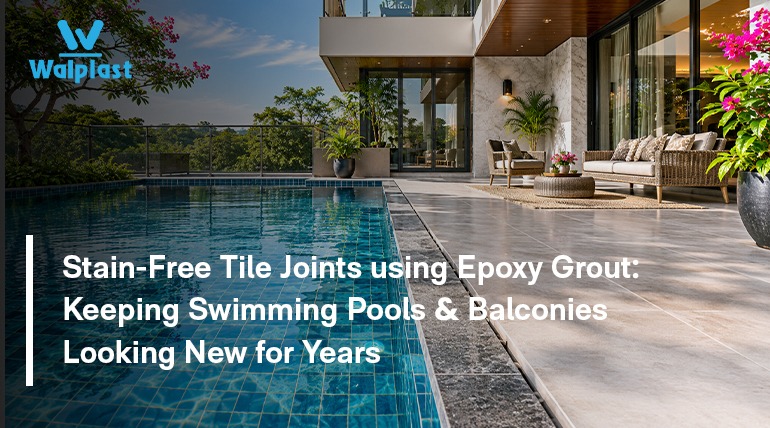
A beautiful swimming pool or balcony can instantly elevate the look of a home. From elegant marble balconies to vibrant mosaic pools, carefully selected tiles often become the highlight of the space.
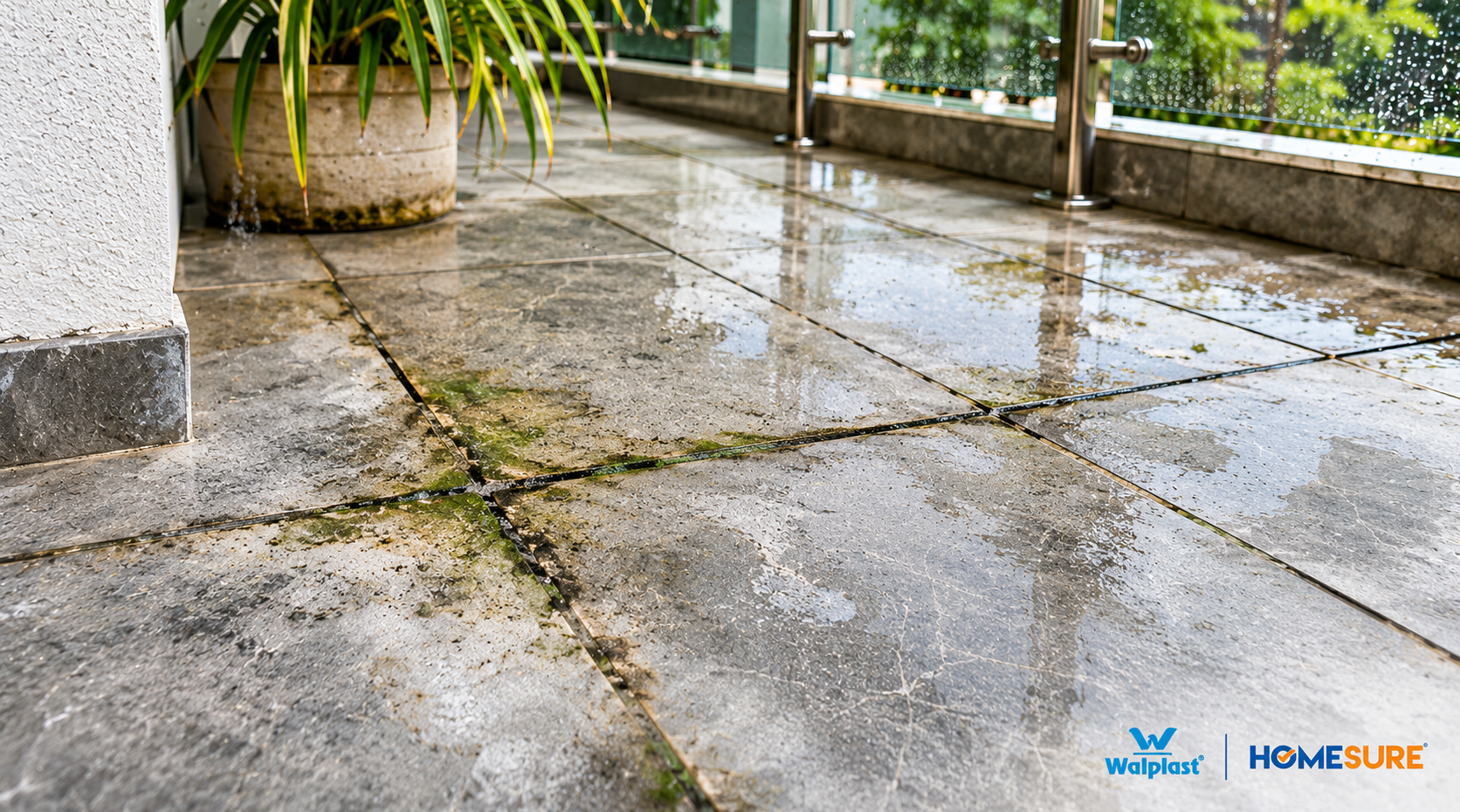
However, many homeowners face a common problem after a few months or years. The tiles may still look good, but the joints between them begin to lose their appearance. They develop dark patches, stains, algae growth, or white deposits, making the entire surface look aged and poorly maintained.
In most cases, the problem is not the tile itself but the grout used between the tiles.
Areas such as balconies, terraces, swimming pools, fountains, and other wet zones are constantly exposed to moisture, sunlight, cleaning chemicals, and changing weather conditions. Over time, ordinary cement grout starts absorbing water and dirt, leading to stains and deterioration.
This is where epoxy grout can make a significant difference. Products such as Walplast HomeSure TileEx Epoxy Grout are designed to offer stronger, more durable, and stain-resistant tile joints that remain cleaner and easier to maintain for years.
Why Do Tile Joints Become Stained?
Many tiled surfaces begin looking uneven after some time because the grout lines attract and hold dirt more easily than the tiles themselves.
Traditional cement-based grout contains tiny pores. These pores absorb moisture, dust, cleaning residues, and other contaminants. Once these substances enter the grout, they become difficult to remove completely.
For balconies and swimming pools, the challenge becomes even greater.
Continuous Exposure to Water
Balconies are exposed to rain, washing, and humidity throughout the year. Swimming pools remain in constant contact with water.
When moisture repeatedly enters porous grout joints, it can gradually weaken the surface and create conditions that encourage staining and deterioration.
Exposure to Pool Chemicals
Swimming pool water contains chemicals that help keep the water clean and safe. Over time, these chemicals can affect ordinary cement grout, causing it to lose its original appearance and strength.
Mold, Mildew, and Algae Growth
Moisture trapped within grout joints creates ideal conditions for biological growth. This is why many pool and balcony grout lines eventually develop green, black, or dark patches despite regular cleaning.
Dirt and Environmental Deposits
Outdoor areas are constantly exposed to dust, pollution, leaves, bird droppings, and other contaminants. Porous grout absorbs these deposits, making the joints appear dirty even after the surrounding tiles have been cleaned.
Why More Homeowners Are Choosing Epoxy Grouts
The expectations from modern homes have changed. Homeowners no longer want surfaces that require frequent repairs or deep cleaning.
That is why epoxy grout has become increasingly popular for premium residential as well as commercial projects.
Unlike conventional grout, epoxy grout forms a dense and durable joint that helps resist water penetration, staining, and everyday wear.
As a result, tiled surfaces remain cleaner, more attractive, and easier to maintain over the long term.
What is Epoxy Grout and what makes it Different?
Epoxy grout is made using an epoxy resin and hardener that are mixed before installation.
Once applied, the material undergoes a chemical curing process and forms a strong bond within the tile joints.
These are a few epoxy grout advantages compared to traditional alternatives.
Better Resistance to Stains
One of the biggest benefits of epoxy grout is its stain-resistant nature.
Because the surface is much denser than conventional grout, dirt and contaminants find it harder to penetrate the joints. This helps maintain a cleaner appearance for longer periods.
Water Resistance
Water is one of the primary reasons grout joints deteriorate over time.
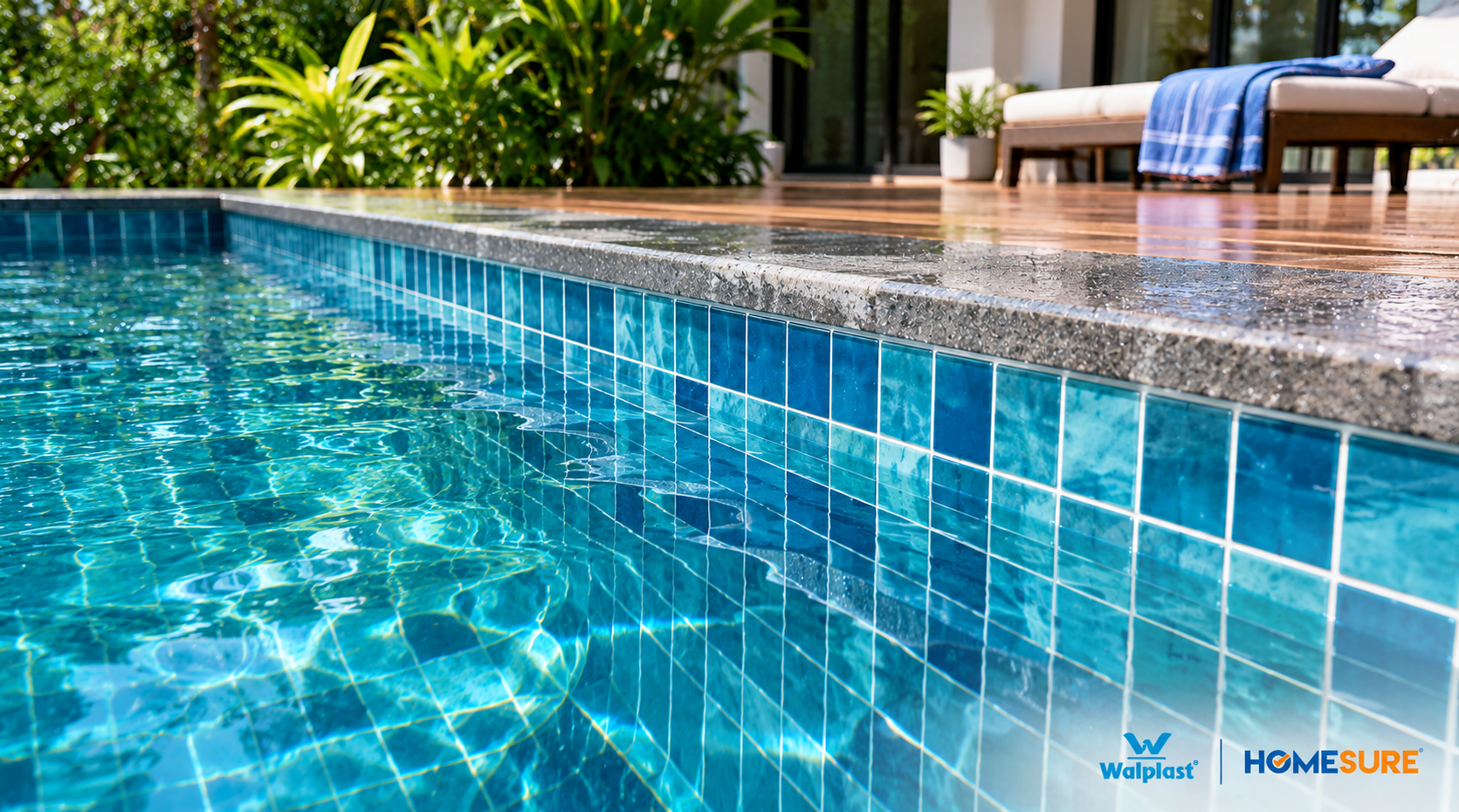
Epoxy grout is designed to resist water penetration, making it particularly suitable for swimming pools, balconies, terraces, fountains, and other wet areas.
Chemical Resistance
Areas such as swimming pools are exposed to various cleaning and water-treatment chemicals throughout the year.
A quality epoxy grout offers strong resistance to these chemicals, helping maintain the performance and appearance of the tiled surface.
Negligible Shrinkage
Traditional tile grout can sometimes develop tiny gaps or cracks as it dries. These openings often become collection points for dirt and moisture.
Epoxy tile grout has negligible shrinkage, helping create more durable and uniform joints.
Strong and Durable Performance
Tile joints are subjected to foot traffic, movement, cleaning, and regular use every day.
Epoxy grout provides higher strength and durability, making it suitable for both residential and commercial environments.
Why Walplast HomeSure TileEx Epoxy Grout for tiles Is a Smart Choice
When looking for the best epoxy grout for a swimming pool, balcony, terrace, or wet area, durability is just as important as appearance.
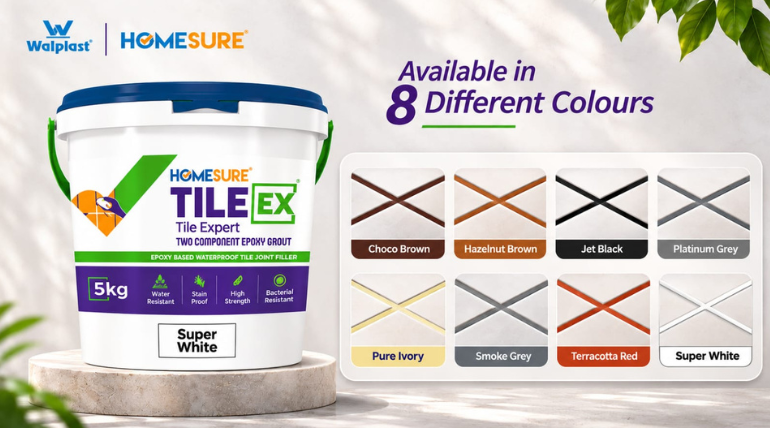
Walplast HomeSure TileEx Epoxy Grout has been developed to deliver reliable performance in demanding conditions while helping maintain clean and attractive tile joints.
Some of its key benefits include:
- Stain-free performance
- Water-resistant properties
- Resistance to common chemicals used in wet environments
- High strength and durability
- Negligible shrinkage
- Low VOC formulation
- Availability in multiple colours
- Suitable for both residential and commercial applications
The product can be used for ceramic tiles, vitrified tiles, marble, granite, swimming pools, fountains, bathrooms, kitchens, balconies, and other wet areas.
Its smooth finish also makes cleaning easier, reducing the effort needed to maintain tiled surfaces.
Best Practices for Epoxy Grout Application
Even the best product performs properly only when installed correctly.
Following the right installation process helps achieve better results and ensures long-term performance.
1. Prepare the Surface Properly
Before grouting begins, tile joints should be clean and free from dust, adhesive residue, spacers, or loose particles.
The surface should also be dry and ready for application.
2. Mix Components Thoroughly
Epoxy grout works through a chemical reaction between its components.
Proper mixing is essential to achieve durability and desired results.
3. Work Within the Recommended Time
Epoxy grout should be applied within its recommended working time after mixing.
Preparing manageable quantities helps installers work efficiently and avoid material wastage.
4. Clean Excess Material Promptly
Cleaning grout residue from tile surfaces immediately after application helps achieve a neat and professional finish.
Delays in cleaning can make residue removal more difficult later.
5. Allow Proper Curing
Adequate curing time is essential for the grout to develop its full strength and performance.
Following the manufacturer’s recommendations ensures the best long-term results.
Long-Term Benefits for Property Owners
While epoxy grout may involve a higher initial investment compared to conventional grout, the long-term value often outweighs the upfront cost.
Reduced Maintenance
Stain-resistant joints require less intensive cleaning and remain visually appealing for longer periods.
Fewer Repairs
Durable grout joints help reduce the need for frequent repair and replacement work, saving both time and money.
Better Appearance
Clean and consistent grout lines improve the overall appearance of the tiled surface and enhance the visual appeal of the space.
Improved Property Value
Well-maintained swimming pools, balconies, terraces, and outdoor living spaces contribute positively to the overall value and appeal of a property.
Conclusion
Tile joints may seem like a small detail, but they play a major role in the appearance and durability of a tiled surface. In swimming pools, balconies, terraces, and other wet areas, traditional grout often struggles to withstand constant exposure to moisture, dirt, and chemicals.
By choosing a high-performance solution such as Walplast HomeSure TileEx Epoxy Grout, homeowners can enjoy cleaner, stronger, and more durable tile joints with reduced maintenance requirements. The result is a tiled surface that continues to look attractive, perform reliably, and stay easier to maintain for years to come.