
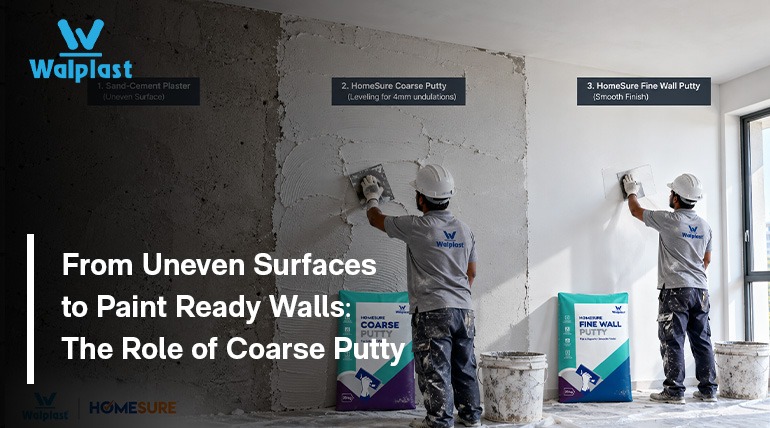
A fresh coat of paint can change the look of a room, but the final result also depends on the surface underneath. Small depressions, pinholes and uneven patches in plaster may remain visible after painting, especially when light falls across the wall.
This is why surface preparation matters. Before choosing a paint colour or finish, it helps to check whether the plastered wall needs additional levelling.
Coarse wall putty is used at this stage. It helps address surface unevenness and provides a base for fine wall putty. Understanding where it fits into the finishing process can help homeowners and contractors choose the right approach for their walls.
What Is Coarse Putty?
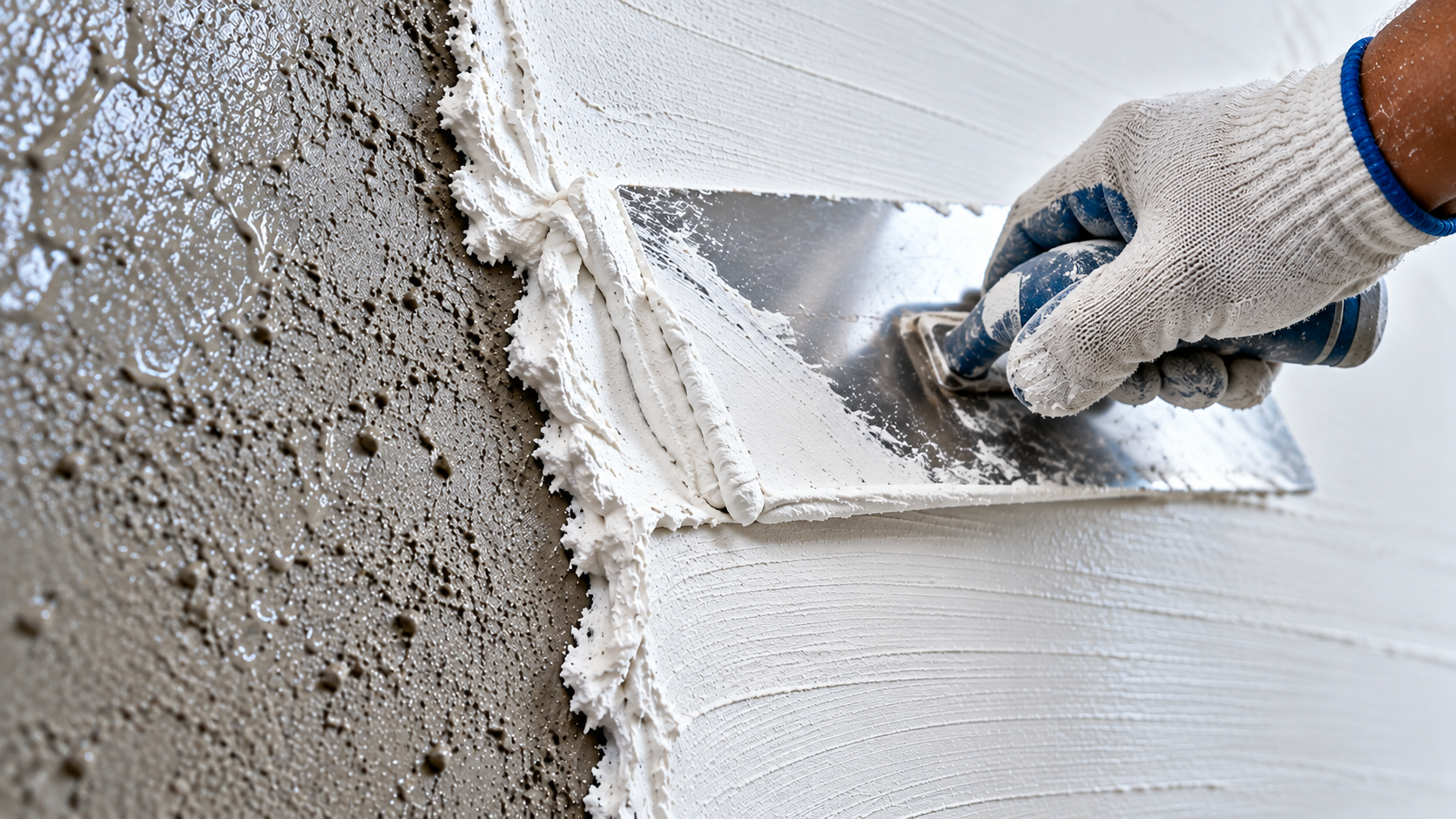
Coarse putty is a base coat used to level uneven plastered surfaces before fine finishing. It helps fill pinholes and shallow depressions that can affect the appearance of the finished wall.
Think of it as a preparation layer between plaster and fine wall putty. The plaster forms the underlying surface, coarse putty helps improve its evenness, and fine putty provides a smoother finish.
However, coarse putty does not replace proper plastering or repairs. Loose plaster, deep damage and cracks that need repair should be addressed before putty application begins. Applying another coating over an unsound surface will not solve the underlying problem.
Why Uneven Walls Need Attention Before Painting
Paint adds colour and finish, but it should not be expected to level a wall. Uneven areas may become more noticeable after painting, particularly near windows, wall lights or other sources of angled light.
Trying to fill deeper irregularities with repeated layers of fine putty may also lead to unnecessary material use. The better approach is to inspect the surface first and select a suitable material for the amount of levelling required.
Coarse putty can be useful where plaster is sound but has noticeable surface variation. Where the plaster is already reasonably even, the finishing requirements may be different. Coarse putty is therefore selected according to the condition of the wall, rather than treated as a compulsory layer for every project.
Coarse Putty and Fine Wall Putty: What Is the Difference?
Both products contribute to wall preparation, but they serve different purposes. Coarse putty helps level the wall, while fine putty makes the surface smooth.
Point of comparison | Coarse wall putty | Fine wall putty |
Main purpose | Levels surface unevenness and fills pinholes and shallow depressions | Smooths minor surface imperfections and refines the finish |
Texture | Coarser texture for levelling | Finer texture for smoothing |
Application surface | Sound plastered surfaces that need additional levelling | Suitably prepared plaster or a coarse putty layer |
Place in the process | Applied before fine putty, where required | Applied before the specified primer and paint system |
Surface appearance | Provides a more even base | Provides a smoother, finer finish |
Selection | Depends on the condition and unevenness of the plaster | Depends on the required finish and product instructions |
For HomeSure Coarse Putty, fine wall putty must be applied over it. Coarse putty is not necessary for every wall; its use depends on the condition of the plastered surface.
The main difference is the job each product performs. Coarse putty prepares an uneven base, while fine putty improves its smoothness.
Using the right material at each stage helps avoid asking one product to perform work beyond its intended purpose.
When Should You Consider Coarse Putty?
Coarse putty may be worth considering when a plastered wall has:
• Noticeable shallow depressions.
• Pinholes and small surface cavities.
• Rough patches that need levelling.
• Uneven areas that would be difficult to address with a thin finishing layer.
The surface should be checked before work begins. If plaster sounds hollow, comes away easily or shows continuing damage, investigate and repair those areas first.
Similarly, visible cracks should be assessed rather than simply covered. Avoid treating coarse putty as a structural repair material or assuming that it will accommodate ongoing movement.
How to Prepare the Surface
Good preparation helps create a reliable base for subsequent coats.
Remove dust, loose particles and other material that could interfere with bonding. Check that the plaster is firm and that necessary repairs have been completed.
New plaster should be adequately cured and ready for coating according to the relevant product instructions. Curing and drying are different processes, so a fixed number of days should not be used as the only measure of readiness.
Also check for signs of dampness or recurring surface deposits. Their cause should be understood before covering the affected area.
Applying HomeSure Coarse Putty
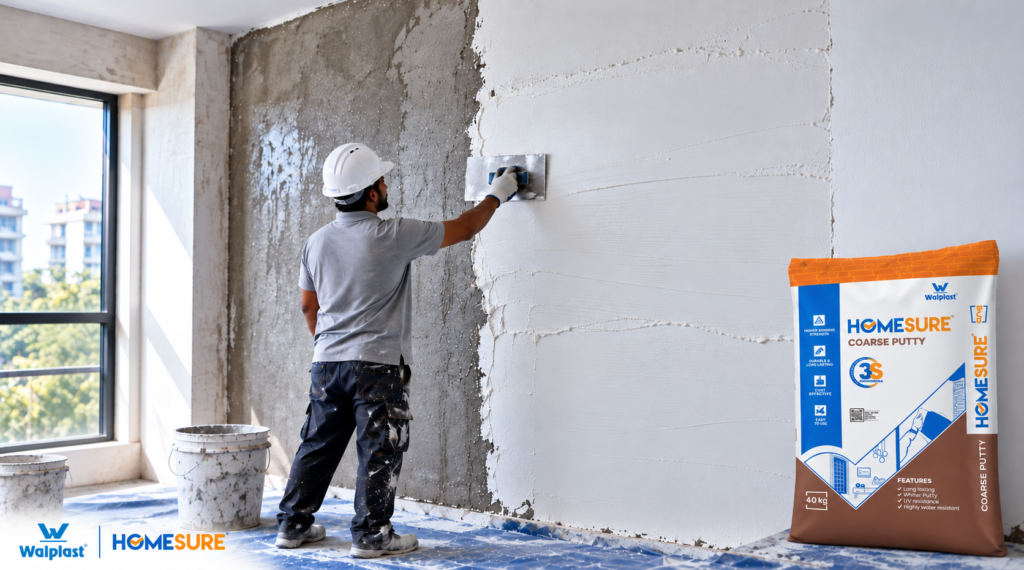
Walplast’s published guidance recommends dampening the surface with clean water and allowing excess water to drain away before application.
For HomeSure Coarse Putty, the website specifies:
• A first coat of 2 to 3 mm.
• A drying period of at least 3 to 4 hours.
• A second coat of 1 to 2 mm, if required, after the first coat has completely dried.
• Fine wall putty over the coarse putty layer.
The published mixing guidance is approximately 250 to 300 ml of clean water per kilogram of powder. Follow the current product instructions when preparing and applying the material.
Keep tools and mixing containers clean. Prepare a manageable quantity and avoid changing the consistency by adding water without reference to the manufacturer’s guidance.
Why Fine Putty Follows the Coarse Layer
Levelling and smoothing are related, but they are not the same task.
A wall may be more even after coarse putty application while still needing a finer surface finish. Fine wall putty helps complete that stage before primer and paint are applied according to the chosen paint system.
This distinction also answers a common question: requiring fine putty over a coarse coat does not mean that coarse putty is needed beneath every fine putty application. The starting condition of the plaster determines whether additional levelling is necessary.
Choosing the Right Coarse Putty
Start with the surface and the intended application area.
Check whether the product is suitable for the substrate, whether it is intended for interior or exterior use, and what application thickness the manufacturer recommends.
Material planning matters too. A rougher wall may need more material than a relatively even one. Coverage figures should therefore be considered alongside actual site conditions and the required application thickness.
Avoid choosing a product only because it promises a thicker coat. The aim is to achieve a sound, even surface within the recommended application limits.
HomeSure Coarse Putty by Walplast
HomeSure Coarse Putty contains white cement, polymers and minerals. Walplast describes it as a foundation coat for addressing unevenness and pinholes in plastered surfaces.
The product is suitable for interior walls, exterior walls and ceilings. Its listed benefits include bonding to base plaster, good workability, durability and reduced consumption of the subsequent putty layer. Coarse putty coverage for HomeSure Coarse Putty is approximately 2 to 3 sq. ft. per kg, depending on surface condition and application thickness.
It helps create an even surface, reduce surface cracking and provide strong bonding to the base plaster. Its excellent workability and fast drying make application easier, while the hard, tough finish and UV resistance support lasting durability. By levelling the surface before fine putty application, it helps reduce fine putty consumption, save time and manage finishing costs. It is available in 20 kg and 30 kg packs.
Its role is straightforward: help prepare an uneven plastered surface for fine finishing. Product selection and application should always follow the current technical guidance.
A Better Finish Begins with Surface Preparation
An attractive painted wall depends on careful work at every stage. Checking the plaster, completing repairs and choosing suitable preparation materials all contribute to the result.
Where additional levelling is needed, coarse putty can help create a more even base. Fine putty then refines the surface before the specified primer and paint coats.
Giving these preparation stages enough attention helps the finished colour and texture look their best.