
Modern construction materials are no longer judged only by strength and finish. Today, durability, moisture resistance, and long-term surface protection are equally important, especially in regions exposed to heavy rainfall, humidity, and fluctuating weather conditions. One such innovation in surface preparation technology is water-repellent wall putty with the “Lotus Bead Effect.”
Premium wall putties are engineered not just to smoothen surfaces before painting, but also to create a protective barrier against moisture penetration. This advanced hydrophobic performance helps maintain the appearance and life of painted walls while reducing maintenance costs over time.
Products like Walplast premium putty solutions are designed with water-repellent additives that help create this effect on wall surfaces.
What is the Lotus Bead Effect?
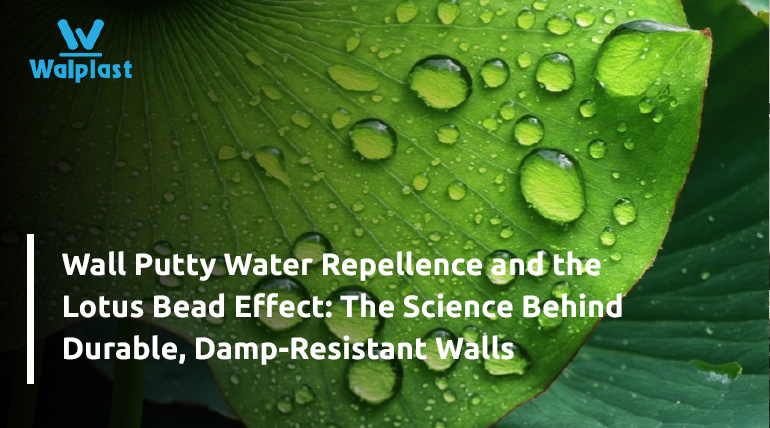
The Lotus Bead Effect is inspired by the natural self-cleaning properties of lotus leaves. Water droplets do not spread across the leaf surface; instead, they form beads and roll away, carrying dust and contaminants with them.
Scientifically, this happens because the surface possesses hydrophobic characteristics, meaning it repels water rather than absorbing it. In construction materials, specially formulated polymers and additives help create a similar effect on treated walls.
When water falls on a hydrophobic wall putty surface:
• Water droplets remain spherical
• Moisture absorption is reduced
• Surface dampness decreases
• Dirt accumulation becomes less severe
• Paint layers remain protected for longer periods
This technology is especially beneficial for exterior walls and high-humidity interiors like kitchens and bathrooms.
Research on lotus-inspired hydrophobic surfaces shows how textured and water-repellent coatings improve wettability resistance and self-cleaning behaviour.
Why Water Repellence Matters in Wall Putty
Traditional wall putties mainly focus on levelling and smoothness. However, standard putty surfaces can absorb moisture over time, especially when exposed to rainwater seepage, condensation, or humidity.
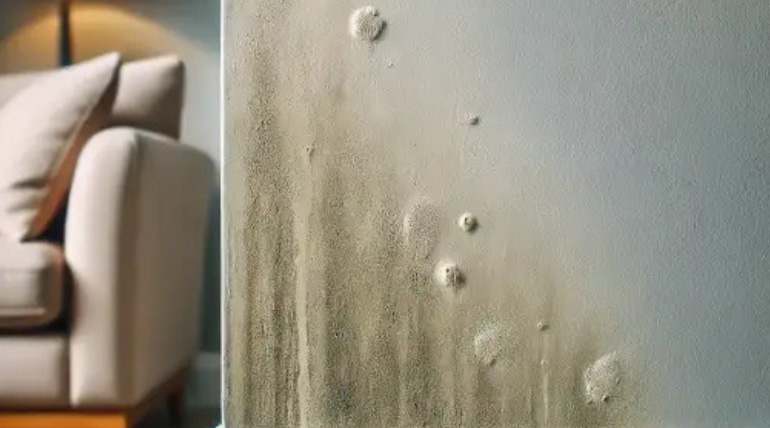
Moisture intrusion can lead to:
• Paint peeling
• Surface blistering
• Efflorescence
• Fungal growth
• Damp patches
• Reduced paint life
• Cracks and weakening of the substrate
Water-repellent wall putties act as the first line of defense between the wall substrate and environmental moisture.
Advanced putties containing hydrophobic polymers help reduce capillary absorption, preventing water from entering microscopic pores within the plastered surface.
The Role of Hydrophobic Additives
Water-repellent wall putty contains specially selected additives and polymers that modify the surface energy of the material. These additives reduce the ability of water to spread and penetrate.
Key technical characteristics often associated with such putties include:
• Low water absorption
• High adhesion strength
• Improved workability
• UV resistance
• Anti-efflorescence performance
• Enhanced durability
• Crack resistance
Technical data from premium-grade putties also indicate low Karsten Tube water absorption values, which help measure resistance to water penetration.
Understanding Anti-Efflorescence Properties
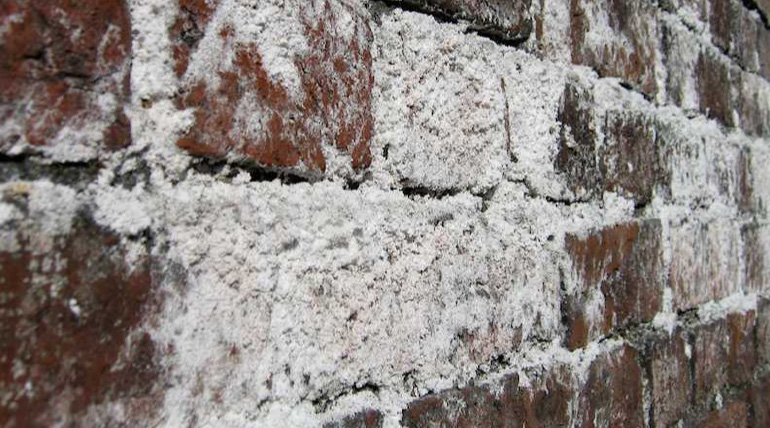
Efflorescence is the white powdery deposit often seen on walls due to salt migration caused by moisture movement through masonry or plaster.
When water enters walls, it dissolves soluble salts. As moisture evaporates, these salts remain on the surface, affecting both appearance and paint performance.
Water-repellent wall putties reduce moisture migration and therefore, help minimize efflorescence formation.
Premium putties designed for exterior and interior applications are commonly developed with anti-efflorescent properties to improve surface longevity.
How Water-Repellent Putty Protects Paint
Paint systems are only as strong as the surface beneath them. If the substrate absorbs moisture, even premium paints can fail prematurely.
A hydrophobic putty layer helps by:
1. Reducing moisture penetration into the wall
2. Creating a smoother and more stable paint base
3. Minimizing paint consumption
4. Improving paint adhesion
5. Extending repainting cycles
This becomes particularly important for exterior walls exposed to monsoon conditions and UV radiation.
Application Areas
Water-repellent wall putty is suitable for:
• Exterior walls
• Interior walls
• Ceilings
• Concrete surfaces
• Cement plaster
• Renovation projects
• High-humidity areas
Many premium formulations can be used on both new and old plastered surfaces.
Importance of Surface Preparation
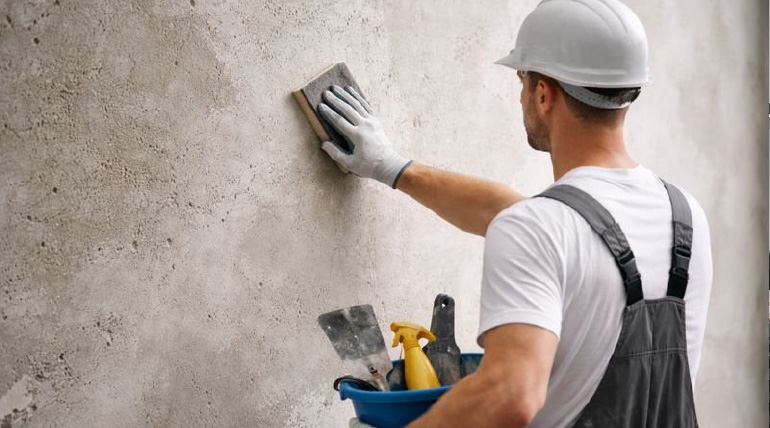
Even the best wall putty requires proper application practices for effective performance.
Recommended preparation steps generally include:
• Cleaning loose dust and contaminants
• Repairing cracks and damaged plaster
• Damping the surface lightly before application
• Maintaining proper water-to-putty ratio
• Applying uniform coats
• Allowing adequate drying time between coats
Incorrect mixing or excessive water addition may reduce hydrophobic performance and durability.
Performance Parameters That Matter
When selecting a water-repellent wall putty, professionals usually evaluate technical parameters such as:
Parameter | Importance |
Adhesion strength | Ensures strong bonding with plaster |
Water absorption | Indicates moisture resistance |
Pot life | Determines workability duration |
Whiteness | Improves paint brightness |
UV resistance | Enhances exterior durability |
Crack resistance | Minimizes surface defects |
Smoothness | Improves final paint finish |
Technical specifications from premium putty products indicate strong adhesion and high water resistance performance.
The Growing Demand for Advanced Wall Protection
With increasing awareness about long-term maintenance costs, builders and homeowners are shifting toward multifunctional surface preparation materials.
Today’s expectations from wall putty go beyond basic leveling. Users now look for:
• Damp resistance
• Better paint life
• Lower maintenance
• Smooth aesthetic finish
• Crack resistance
• Exterior durability
• Water repellence
This is why hydrophobic and polymer-modified putties are becoming increasingly popular in modern construction projects.
How Premium Putty Technology is Evolving
Manufacturers continue to improve formulations through polymer science and material engineering. Advanced wall putties now combine:
• Cement chemistry
• Fine mineral fillers
• Functional polymers
• Hydrophobic additives
• Surface enhancement agents
Some products, including offerings under the HomeSure range, are specifically formulated to provide water repellence with Lotus Bead Effect technology while also offering anti-efflorescence and smooth finishing performance.
Conclusion
Water repellence in wall putty is no longer a premium luxury feature—it is becoming an essential requirement for durable construction. The Lotus Bead Effect demonstrates how biomimicry and material science can work together to create walls that resist moisture, remain cleaner, and support longer-lasting paint finishes.
By reducing water absorption and minimizing damp-related damage, hydrophobic wall putties help improve the overall health, appearance, and lifespan of building surfaces. Whether for residential, commercial, or renovation projects, choosing a technologically advanced water-repellent putty can significantly improve long-term wall performance.
Advanced solutions such as Walplast HomeSure Premium Putty are developed with water-repellent technology and anti-efflorescence properties to help create smooth, durable, and moisture-resistant wall surfaces suitable for modern construction needs.