
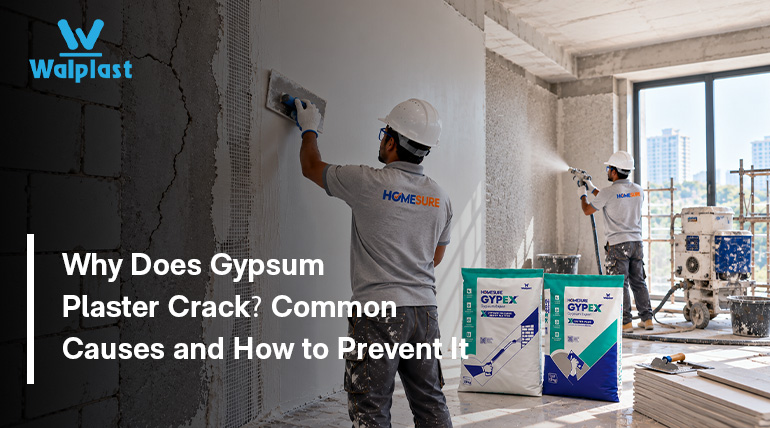
Gypsum plaster is widely used for interior walls and ceilings because it provides a smooth finish, is easy to apply and helps save time during construction. It is a popular choice for homes, offices and commercial spaces.
However, cracks can sometimes appear on newly plastered walls, affecting their appearance and finish. These cracks may develop due to improper surface preparation, incorrect mixing, excessive plaster thickness or movement in the underlying wall.
Understanding the causes of cracks in gypsum plaster and following the correct application practices can help prevent many of these problems.
Why Does Gypsum Plaster Crack?
Gypsum plaster hardens when mixed with water and forms a smooth, solid surface after setting. For the plaster to perform well, it must bond properly with the wall and be applied under suitable conditions.
When the wall is not prepared correctly, the mixing ratio is incorrect or the plaster is applied unevenly, cracks may develop.
Here are some common reasons why gypsum plaster cracks and how to prevent them.
1. Improper Surface Preparation
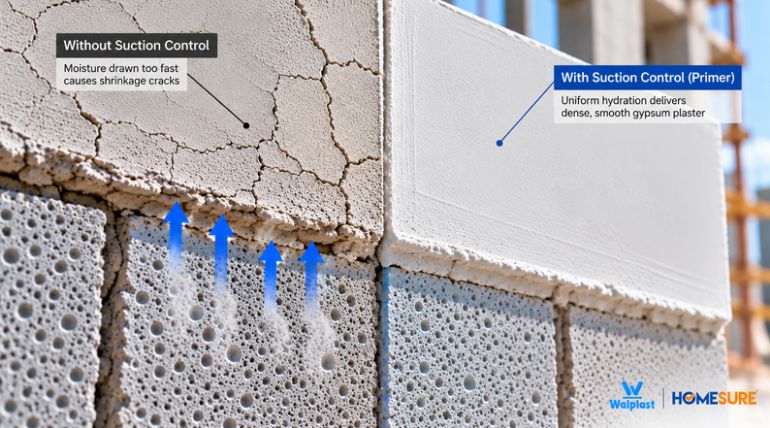
One of the main reasons for cracks in gypsum plaster is inadequate surface preparation.
Dust, loose particles, oil, grease and other impurities on the wall can affect the bond between the plaster and the surface. This may eventually lead to cracks or separation of the plaster.
How to prevent it:
• Clean the wall thoroughly before applying plaster.
• Remove loose particles, dust, dirt and grease.
• Repair existing cracks and damaged areas before plastering.
• Prepare the surface according to the manufacturer’s recommendations.
Proper surface preparation for gypsum plaster helps improve adhesion and achieve a uniform finish.
2. Incorrect Water-to-Plaster Ratio
The amount of water used while mixing gypsum plaster plays an important role in its performance.
Adding excess water can reduce plaster strength, while too little water may make the mixture difficult to apply.
How to prevent it:
• Follow the recommended gypsum plaster mixing ratio.
• Always use clean water and mixing tools.
• Add gypsum plaster to water and mix thoroughly to achieve a smooth, lump-free consistency.
• Avoid adding extra water once the plaster starts setting.
Correct mixing helps maintain workability, strength and consistency during application.
3. Applying Gypsum Plaster Too Thickly
Applying gypsum plaster beyond the recommended thickness can affect its setting and bonding with the wall.
Excessively thick or uneven application may increase the chances of cracking, particularly when the surface underneath is irregular.
How to prevent it:
• Follow the recommended gypsum plaster thickness for the selected product.
• Check and correct major wall irregularities before application.
• Maintain a uniform plaster thickness wherever possible.
• Follow the manufacturer’s application instructions.
Maintaining the correct thickness helps achieve a smooth and consistent finish.
4. Rapid Drying and High Temperatures
Weather and site conditions can also affect the setting and drying of gypsum plaster.
Excessive heat, direct sunlight and strong airflow may cause uneven drying, increasing the chances of fine surface cracks.
How to prevent it:
• Avoid applying plaster under extreme temperatures.
• Protect freshly applied plaster from excessive heat and strong airflow.
• Allow sufficient time for the plaster to set and dry.
• Ensure the surface is completely dry before painting.
Unlike conventional cement plaster, gypsum plaster does not require water curing when used according to the manufacturer’s instructions.
5. Movement in Walls and Building Structures
Sometimes cracks appear because of movement in the underlying wall rather than a problem with the gypsum plaster itself.
Buildings may experience minor movement due to temperature changes, settlement or differences in construction materials.
Cracks are commonly seen near the junctions of brick walls, RCC columns and beams.
How to prevent it:
• Check the wall for existing cracks before plastering.
• Ensure joints between different construction materials are properly treated.
• Address any underlying wall or structural issues before plastering.
• Investigate cracks that repeatedly appear in the same location.
Understanding the cause of wall movement is important for preventing recurring cracks.
6. Poor Application Practices
Even good-quality gypsum plaster may develop problems if it is not applied correctly.
Using plaster that has already started setting, mixing inconsistent batches or applying material on an unsuitable surface can affect the final finish.
How to prevent it:
• Follow the manufacturer’s recommended application procedure.
• Prepare only the required quantity of plaster.
• Use the mixture within the recommended working time.
• Avoid adding water or fresh material to plaster that has already started setting.
• Ensure application is carried out by trained workers.
Following proper gypsum plaster application techniques helps reduce workmanship-related defects.
How to Identify Common Gypsum Plaster Cracks
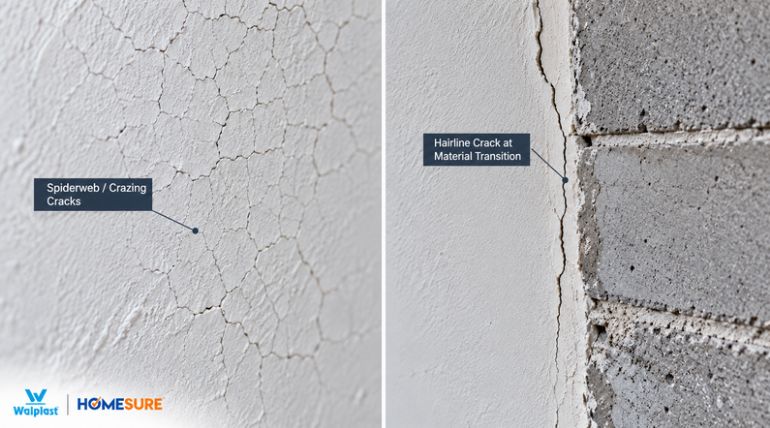
The appearance and location of cracks can help identify possible causes.
Type of crack | Possible cause |
Fine hairline cracks | Rapid drying or application conditions |
Spiderweb-like cracks | Uneven drying or surface-related issues |
Cracks near doors and windows | Movement or stress around openings |
Cracks at RCC and brickwork junctions | Movement between different materials |
Cracks that repeatedly appear | Underlying wall or structural issues |
Cracks across large wall areas | Surface preparation or application-related problems |
These are possible causes rather than confirmed diagnoses. Persistent or significant cracks should be inspected by a qualified professional.
Simple Tips to Prevent Gypsum Plaster Cracks
A few precautions during plastering can help reduce the risk of cracks and improve the overall finish.
1. Prepare the surface properly: Clean the wall and remove loose material before plastering.
2. Follow the correct mixing ratio: Use the amount of water recommended by the manufacturer.
3. Maintain the recommended thickness: Avoid applying plaster beyond the specified thickness.
4. Check existing wall cracks: Repair underlying defects before application.
5. Avoid rapid drying: Protect freshly applied plaster from excessive heat and airflow.
6. Use the right gypsum plaster: Select a product suitable for the surface and application.
7. Follow application guidelines: Ensure proper mixing, application and drying.
These practices help improve the quality and durability of gypsum-plastered surfaces.
Choosing the Right Premium Gypsum Plaster for Your Project
Along with proper application, selecting the right gypsum plaster is important for achieving a smooth and durable finish.
HomeSureGypEx Gypsum Plaster Products by Walplast, leading gypsum plaster manufacturer, offers a range of solutions designed for different interior plastering requirements.
The range includes HomeSureGypEx Silver, GypEx Silver Plus and GypEx Platinum, which offer smooth finishing, workability and bonding performance for suitable interior applications.
For areas where additional moisture resistance is required, HomeSureGypExMoistShield , a waterproof gypsum plaster, specially developed for moisture-prone applications, subject to the recommended surface conditions and product guidelines.
Choosing a suitable product and following the recommended application process can help reduce the chances of plastering defects and achieve a better finish.
Explore the premium gypsum plaster range from HomeSureGypEx to learn more about gypsum plaster solutions for your project.
Conclusion
Cracks in gypsum plaster can occur due to several reasons, including improper surface preparation, incorrect mixing, excessive plaster thickness, rapid drying and movement in the underlying wall.
While some cracks may be caused by structural factors, many application-related issues can be prevented by following the correct procedures.
Preparing the wall properly, using the right mixing ratio, maintaining the recommended thickness and allowing sufficient drying time can make a significant difference.
With suitable materials and proper workmanship, gypsum plaster can provide a smooth, attractive and long-lasting finish for interior walls and ceilings.