
These days, speed, efficiency, and a good finish are not options in construction; they are expected. Still, a lot of projects still use old-fashioned plastering methods that use too much water, take too long, and cost more labour. Here’s where gypsum plaster is different from the rest.
Gypsum plaster is a faster, cleaner, and more environmentally friendly way to finish interior walls because it doesn’t need water to cure. Some of the biggest problems builders face today are solved by this product, which cuts down on construction time and leaves a surface that is perfectly smooth and ready to paint.
This article talks about the pros and cons of gypsum plaster, how it stacks up against older methods, and why HomeSure gypsum products products are quickly becoming the best choice for modern building.
What Is Gypsum Plaster?
Gypsum plaster is a ready-made building material used for interiors made from gypsum (calcium sulfate hemihydrate) that is processed and then used to give walls and ceilings inside a building a smooth finish. It is mixed with water to make a paste that quickly sets up to make a smooth surface ready for painting. Unlike regular plaster, it is made to be applied more quickly and requires less healing time.
Benefits of Gypsum Plaster
Modern construction uses best gypsum plasters more and more because it is efficient, give good results, and lasts a long time.
Here are some of the benefits of gypsum plaster:
1. No Water Curing Required (Waterless Plaster)
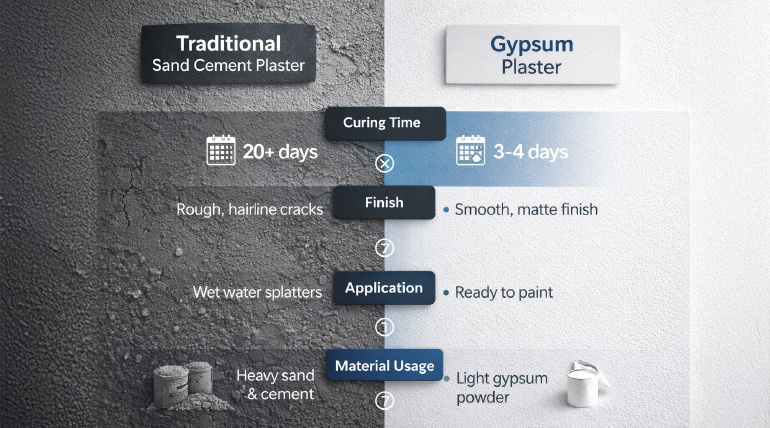
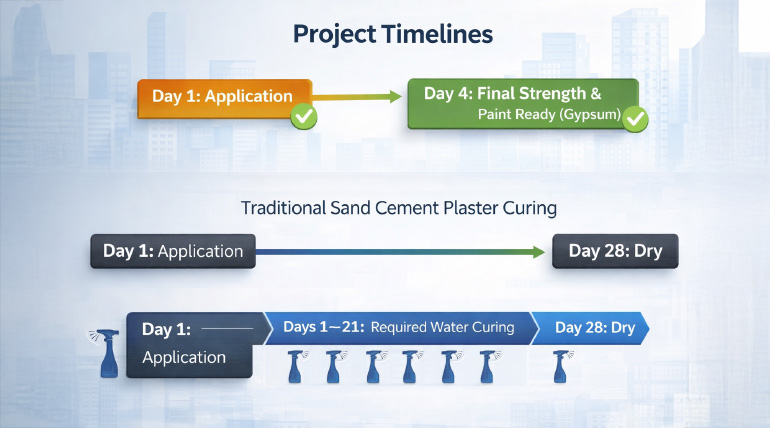
One of the best things about gypsum plaster is that it doesn’t need water to cure like sand cement plaster does, which takes 21 days.
This means:
● Huge water savings
● Reduced labour dependency
● Faster project completion timelines
Products like HomeSure GypEx Silver plaster and HomeSure GypEx machine spray plaster by HomeSure Walplast are well known for their quality and strengths.
2. Faster Construction & Setting Time
Traditional plaster takes a lot longer to set than gypsum plaster:
● Initial setting: ~15–20 minutes
● Paint-ready surface: within 3–4 days (Depending on the thickness and humidity),
This speeds up construction schedules and cuts down on project delays.
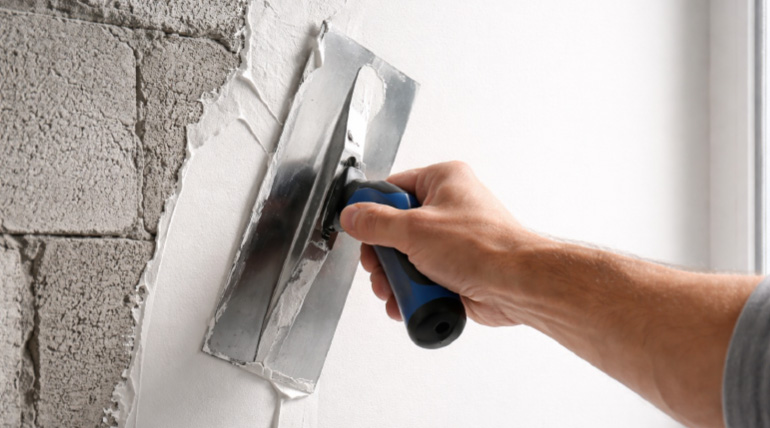
3. Smooth Interior Wall Finish
Gypsum plaster makes the surface very smooth and level, so you don’t need to add any more putty layers.
This results in:
● Better paint finish
● Reduced material usage
● Premium interior aesthetics
4. Lightweight & Structural Advantage
Gypsum plaster is up to 50% lighter than sand cement plaster, which means that buildings don’t have to carry as much weight.
This is especially helpful for
● High-rise buildings
● Large ceiling applications
5. Crack Resistance & Durability
Compared to cement plaster, gypsum plaster:
● Does not shrink significantly
● Minimizes surface cracks
● Maintains structural integrity over time
6. Eco-Friendly & Sustainable
Green building is helped by gypsum plaster because:
● Eliminating river sand usage
● Saving water (no curing)
● Reducing construction waste
Gypsum Plaster vs Sand Cement Plaster
Here are some of the ways that gypsum plaster and sand cement plaster are different:
Feature | Gypsum Plaster | Sand Cement Plaster |
Curing | No curing required | 20–21 days water curing |
Application | Single coat | Multi-layer process |
Finish | Smooth, paint-ready | Requires putty |
Weight | Lightweight | Heavier |
Time | Fast (3–4 days ready) | Slow (3–4 weeks) |
Cracks | No shrinkage | Higher crack risk |
Water Use | Very low | High |
Verdict: Gypsum plaster is best for interior walls where speed, finish, and efficiency matter.
Curing Time & Setting Process Explained
But gypsum plaster still sets and gets stronger over time, even though it is called a “no-curing plaster.”
Key Stages:
● Initial Setting Time: 15–20 minutes (workable stage)
● Final Setting: Within hours to a day
● Full Strength Development: ~5–7 days (depending on conditions)
It works much better than cement plaster because it doesn’t need to be cured in water.
Cost Analysis: Is Gypsum Plaster Worth It?
Gypsum plaster might look a little more expensive per bag at first glance. But the ROI over the long term is much higher.
Cost Savings Breakdown:
1. Labor Cost Reduction
● Faster application reduces labor time by up to 50–70%
2. Water Cost Savings
● No curing eliminates continuous water usage
3. Reduced Material Usage
● No need for putty or multiple layers
4. Faster Project Delivery
● Early completion = lower overhead costs
5. Structural Efficiency
● Lightweight material reduces structural load and long-term stress
Even though it costs a little more up front, gypsum plaster is a better value overall.
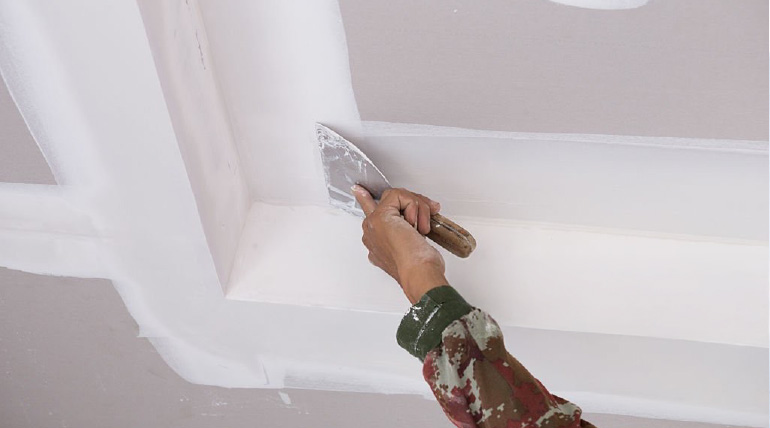
Application Process of Gypsum Plaster
Let’s walk through the process of applying gypsum plaster:
1. Surface preparation (clean, dust-free wall)
2. Mixing gypsum powder with water
3. Applying plaster evenly using a trowel
4. Leveling and smoothing before setting
5. Allowing natural drying (no curing required)
Modern Walplast products have factory-mixed formulations that guarantee consistent quality and make applications more efficient.
Where to Use Gypsum Plaster?
The following places are good for using gypsum plaster:
● Interior walls
● Ceilings
● Inside of Residential apartments
● Inside of Commercial spaces
Try to avoid using –
● Exterior walls
● Wet areas (bathrooms, basements)
Why Choose Walplast Gypsum Plaster?
The gypsum plaster solutions from HomeSure are made for:
● Faster setting and application
● Reduced structural load
● High-quality interior finishes
They meet the needs of modern construction, which needs to be quick, consistent, and long-lasting.
Conclusion
Modern construction is changing because gypsum plaster is a faster, cleaner, and more effective alternative to sand cement plaster. It is quickly becoming the best choice for finishing interior walls because it doesn’t need to cure and gives a better finish for less money.
A range of the best Gypsum products, especially by Walplast, is a smart and future-proof choice for builders and developers who want to cut costs, accelerate the building process, and make sure the interiors look stunning.