
As India moves towards greener construction, eco-friendly gypsum plaster is becoming a preferred alternative to conventional sand-cement plaster. Its ready-to-use formulation eliminates the need for river sand and water curing while delivering a smooth, consistent finish. For modern interiors, it offers a practical combination of sustainability, faster application and reliable performance.
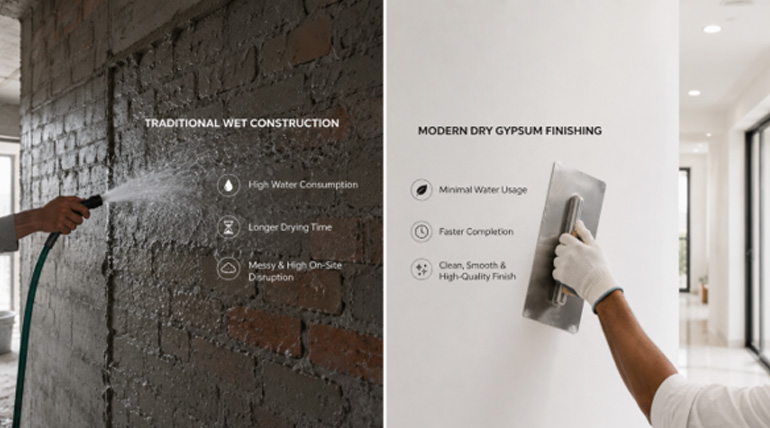
Gypsum Plaster vs Sand Cement: Understanding the Difference
When comparing gypsum plaster vs sand cement, the most significant differences relate to water consumption, material requirements, application time and surface finish.
No water curing after application
Sand-cement plaster requires regular water curing after application to support proper strength development. Depending on site conditions and construction practices, the curing process may continue for several days.
This requires water to be transported, stored and repeatedly applied across plastered surfaces. On large residential and commercial projects, the process can considerably increase water consumption, labour requirements and site supervision.
Inadequate curing can also affect strength development and increase the possibility of surface weakness or cracking.
Gypsum plaster works differently. The powder is mixed with the recommended quantity of water and recrystallises as it sets on the wall. Once applied, it does not require a separate water-curing cycle.Eliminating post-application curing helps reducing the labour and site management associated with repeated curing.
No requirement for river sand
Sand-cement plaster requires substantial quantities of sand. In India, excessive and unregulated river-sand extraction has created serious environmental and regulatory concerns.
Riverbed mining can alter natural water channels, destabilise riverbanks and disrupt aquatic and riparian ecosystems. Restrictions on sand mining can also create uncertainty in material availability, quality and pricing for construction projects.
Gypsum plaster is supplied as a ready-to-use dry mix and does not require river sand. Consequently, its use helps reduce the plastering process’s dependence on a natural resource that is becoming increasingly scarce and regulated.
For large developments, this can significantly reduce sand consumption while supporting cleaner and more organised construction sites.
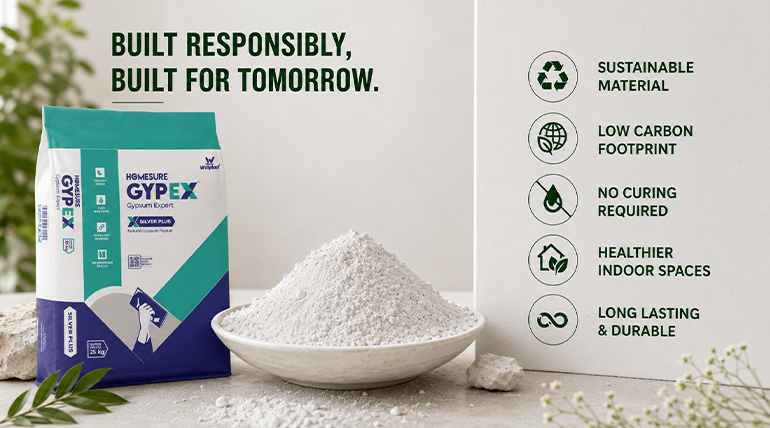
Sustainable Wall Plaster for Resource-Efficient Construction
A sustainable wall plaster should help reduce resource consumption during construction while providing the performance expected from a modern interior-finishing material.
Gypsum plaster supports this objective in several ways.
Mineral-based wall-finishing solution
Gypsum is a naturally occurring mineral composed primarily of calcium sulphate. Gypsum-based plaster is widely used on interior walls and ceilings because of its workability, smooth finish and favourable application characteristics.
Gypsum is also recyclable when clean waste is properly segregated, collected and processed. Appropriate waste-management practices can therefore help reduce the amount of gypsum-based material sent to landfills.
Actual recyclability depends on factors such as contamination, demolition practices and the availability of suitable processing facilities.
Consistent factory-controlled formulation
Gypsum plaster is manufactured under controlled conditions and supplied as a pre-formulated dry mix. At the construction site, applicators only need to add the recommended quantity of clean water and follow the prescribed mixing procedure.
This reduces the inconsistencies associated with manually combining cement, sand and water at the project site. A factory-controlled formulation can provide more predictable coverage, setting time, adhesion and finish across large surfaces.
Correct mixing ratios, substrate preparation and application practices remain essential for achieving the specified performance.
Reduced construction waste
Because gypsum plaster can be applied directly on suitable interior surfaces, it may eliminate the need for multiple plastering and finishing layers.
Reducing the number of application stages can lower material consumption, packaging waste and site-generated debris. It also creates a cleaner working environment and reduces the dust associated with extensive surface correction.
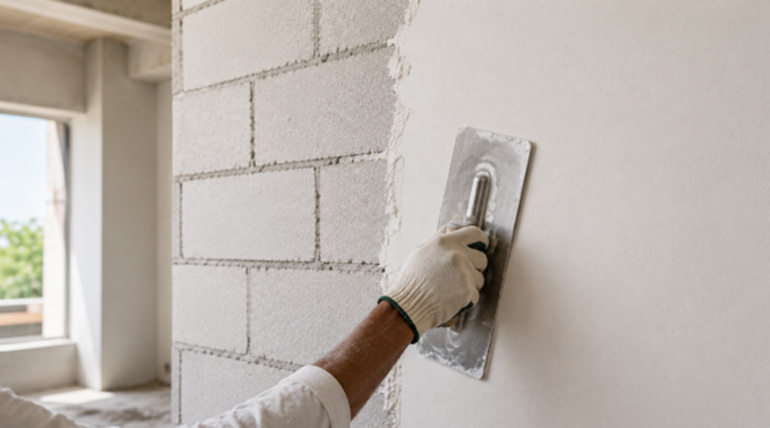
Superior Performance for Modern Interior Walls
The advantages of gypsum plaster extend beyond sustainability. Its application properties make it particularly suitable for modern residential, commercial and institutional interiors.
Direct application on multiple substrates
Gypsum plaster can be applied on commonly used interior surfaces such as AAC blocks, brickwork, RCC and existing sand-cement plaster, subject to proper surface preparation and the manufacturer’s application guidelines.
The substrate must be structurally sound and free from dust, grease, loose particles and other contaminants. Smooth or low-suction concrete surfaces may require additional preparation or an appropriate bonding treatment, depending on site conditions.
Direct application can eliminate the need for a separate sand-cement base coat, reducing material handling and simplifying the plastering process.
Smooth and uniform finish
One of the most important advantages of gypsum plaster is its ability to create a smooth and level interior surface.
A properly applied gypsum plaster can reduce or eliminate the need for an additional putty layer, depending on the required finish and selected paint system. This can help lower material consumption and shorten the wall-finishing process.
The smooth surface may also help reduce paint consumption and support a more uniform decorative finish.
Reduced risk of shrinkage cracks
Sand-cement plaster can develop shrinkage cracks during drying, particularly when mix proportions, curing or application practices are inconsistent.
Gypsum plaster undergoes minimal shrinkage while setting, helping reduce the risk of plaster-related cracks and supporting a smoother, more consistent wall finish.
However, cracks caused by structural movement, substrate failure, building settlement or improper application require appropriate design, surface preparation and construction practices.
Lightweight wall-finishing material
Gypsum plaster is lighter than conventional sand-cement plaster. Its lower weight helps reduce the dead load added by the plastering material and makes it easier to handle during application.
This feature is particularly useful in multi-storey residential and commercial projects where construction efficiency and material handling are important considerations.
Favourable behaviour when exposed to heat
Gypsum contains chemically bound water within its crystalline structure. When exposed to high temperatures, this water is gradually released as vapour, helping slow heat transmission through the material.
This characteristic makes gypsum-based products important components of many fire-resistant wall and ceiling systems.
However, the fire rating of a wall or ceiling depends on the performance of the complete tested system, including material thickness, substrate, framing, joints and application method.
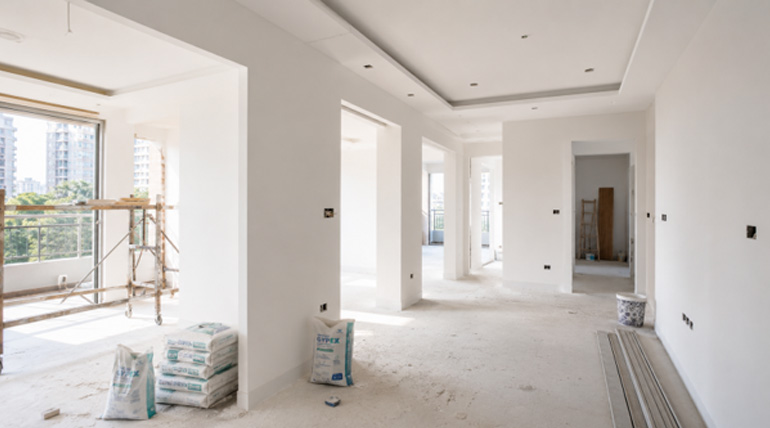
Cost-Effective Wall Plastering Through Faster Application
Cost-effective wall plastering is not determined only by the price of the material. Project teams must also consider water consumption, labour, application stages, drying time, surface correction and overall construction schedules.
Gypsum plaster can help optimise several of these costs.
Single-coat application
Gypsum plaster can be applied as a single plastering coat on suitable interior surfaces. This may eliminate the separate base-plastering and finishing stages commonly associated with conventional wall preparation.
Fewer application stages can reduce labour requirements, material handling and site supervision while helping projects maintain consistent quality.
Faster project completion
The absence of a curing cycle allows subsequent interior-finishing activities to begin sooner, subject to adequate drying and environmental conditions.
For example, HomeSureGypEx Silver Plus Gypsum Plaster has an approximate drying period of 72 hours, depending on humidity and plaster thickness.
Faster wall finishing can improve coordination between plastering, painting, electrical, carpentry and other interior trades. This can help shorten project schedules and improve overall labour productivity.
Reduced requirement for additional finishing materials
A smooth gypsum-plastered surface may reduce the requirement for putty, extensive sanding and multiple corrective layers before painting.
This can lower the overall material and labour cost of wall finishing. The actual savings will depend on the substrate condition, application quality, desired finish and selected decorative coating.
Supporting Modern Green-Building Practices
Gypsum plaster supports resource-efficient construction by addressing several environmental concerns associated with conventional plastering.
It eliminates post-application water curing, removes the need for river sand and can reduce the number of finishing layers required for interior walls. Its lightweight nature and factory-controlled formulation also support more efficient material handling and consistent application.
The overall environmental impact of any construction material depends on its raw-material sourcing, manufacturing process, packaging, transportation, application wastage and end-of-life management.
Architects and builders should therefore evaluate relevant product certifications, technical data and manufacturer documentation when selecting materials for green-building projects.
Choosing the Right Eco-Friendly Gypsum Plaster
Before choosing an eco-friendly gypsum plaster, project teams should evaluate:
• Suitability for the intended interior substrate
• Surface-preparation requirements
• Recommended application thickness
• Coverage and water-to-plaster ratio
• Setting and drying time
• Adhesion and compressive-strength values
• Compatibility with the selected paint system
• Manufacturer guidelines and technical support
• Applicable environmental certifications
Gypsum plaster is primarily intended for interior applications. It should not be used on external walls or in areas continuously exposed to moisture unless the selected product is specifically designed and approved for such conditions.
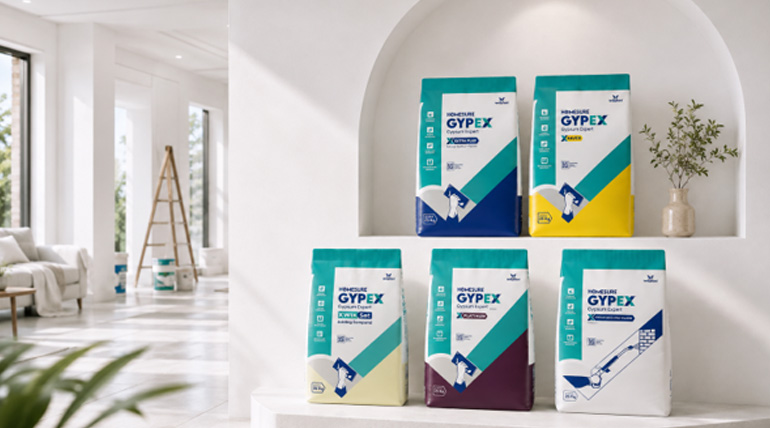
HomeSureGypEx Silver Plus: A Smarter Choice for Interior Walls
HomeSureGypEx Silver Plus Gypsum Plaster is a lightweight, gypsum-based plaster developed for application on internal surfaces such as bricks, blocks, RCC and sand-cement plaster.
Its key advantages include:
• No water curing required
• Direct application on suitable interior surfaces
• Smooth and uniform finish
• Reduced risk of shrinkage cracks
• Excellent bonding
• Lightweight formulation
• High coverage
• Compatibility with different paint and decorative systems
By combining water conservation, faster application and a high-quality finish, HomeSureGypEx Silver Plus offers an efficient alternative to conventional sand-cement plastering.
This approach also reflects Walplast’s broader focus on developing building materials that combine application performance with responsible resource use.
In a recent industry conversation, Sanjay Pawar, Head of R&D and Quality at DryChem India, discussed how research and development is helping the construction-chemicals industry explore alternative raw materials, renewable resources and energy-efficient technologies. The complete discussion is available in this Republic News India feature on sustainable construction chemicals.
Building More Responsibly with Gypsum Plaster
Choosing eco-friendly gypsum plaster is a practical way to conserve construction water, reduce dependence on river sand and simplify interior wall finishing.
Compared with conventional sand-cement plaster, it offers a ready-to-use formulation, no post-application curing and a smooth, lightweight finish. These benefits can help projects save time, improve application consistency and use resources more efficiently.
For builders, contractors, architects and homeowners seeking a sustainable wall plaster, HomeSureGypEx Silver Plus offers a modern solution that balances performance, efficiency and environmental responsibility—helping create better interior walls, one project at a time.