
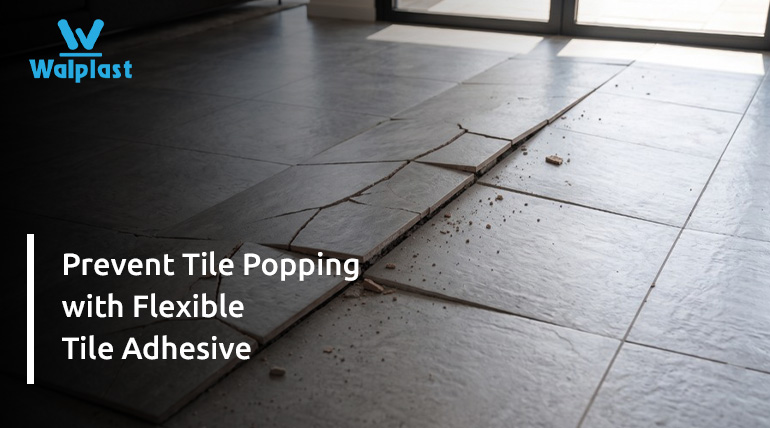
Walk into a house that has weathered several monsoons, and you may notice a tile near the balcony door that sounds hollow when tapped—or, worse, one that has suddenly lifted and cracked. This problem, commonly known as tile popping or tile tenting, is one of the most disruptive and expensive tile failures a homeowner can face.
Although the tile may appear to be at fault, the actual problem usually begins underneath it. Restricted movement, temperature changes, inadequate bonding, moisture exposure and poor installation practices can all place stress on the flooring system. A properly selected flexible tile adhesive, combined with correct installation, can significantly reduce these risks and create a stronger, longer-lasting tiled surface.
Understanding Why Tiles Pop and Tent During Thermal Expansion
Tile popping does not necessarily indicate a defect in the tile itself. In most cases, it occurs when thermal expansion and other movements create stress, for which the flooring system was not properly planned or installed to accommodate.
Post-Monsoon Temperature Changes Stress Tiled Surfaces
During the monsoon, prolonged moisture exposure can affect concrete slabs, screeds and other components of the flooring system. When damp conditions are followed by hot, dry weather, tiles and substrates may expand or contract at different rates. Direct sunlight through windows and balcony doors can further accelerate surface heating.
If the tiled area does not have sufficient space to accommodate this movement, lateral compressive stress builds across the floor. When the pressure exceeds the strength of the bond, tiles can suddenly lift or buckle, sometimes with a loud cracking sound. This phenomenon is known as tile tenting.
Moisture and temperature are not the only contributing factors. Concrete shrinkage, vibration, slab settlement and minor substrate movement can also transfer stress to the tiles installed.
Rigid Sand-Cement Mortar Can Become a Weak Link
Conventional sand-cement mortar performs well under compression but offers limited flexibility. It may not adequately accommodate movement caused by temperature fluctuations, substrate shrinkage, vibration or minor structural settlement.
Instead of adjusting to this movement, a rigid mortar bed can transfer stress to the tile–mortar interface. Over time, this can result in hollow spots, cracking, debonding or tile popping.
Traditional mortar application may also produce uneven thickness and inconsistent coverage. Voids beneath the tiles create unsupported areas where stress becomes concentrated, increasing the likelihood of failure.
Missing Movement Joints Allow Pressure to Accumulate
Tiles naturally expand and contract as environmental conditions change. Movement joints and perimeter gaps provide the space needed for this movement.
When tiles are installed tightly against walls, columns, door frames or other fixed elements, the tiled surface becomes restricted. Pressure then accumulates until it finds a weak point, causing one or more tiles to lift.
Grout joints are not a substitute for properly designed movement joints. The required spacing and placement depend on the size of the tiled area, substrate, exposure conditions and project design.
High-risk areas include:
• Large, uninterrupted living-room floors
• Long hallways and corridors
• Areas near balcony doors and large windows
• Floors receiving prolonged direct sunlight
• Terraces, balconies and exterior surfaces
• Spaces exposed to vibration or temperature changes
Using Polymer-Modified Tile Adhesive to Manage Structural Stress
Making the mortar stronger is not enough; the bonding system must also be capable of managing movement. This is where polymer-modified tile adhesive provides an important performance advantage.
Polymer Modification Accommodates Minor Movement
Polymer-modified adhesives contain specialised additives that improve adhesion, flexibility and workability. Once cured, the adhesive layer can accommodate limited movement between the tile and substrate.
This helps absorb and distribute stresses caused by temperature changes, minor vibration and substrate shrinkage. As a result, less stress is concentrated at the tile–adhesive interface.
Flexible adhesive cannot repair an unstable substrate or accommodate major structural movement. However, as part of a correctly designed tiling system, it can substantially reduce the risk of bond failure.
Strong Adhesion Keeps Tiles Secure
Flexibility does not need to come at the expense of bonding strength. A properly slected flexible tile adhesive offers strong tensile and shear adhesion, helping tiles remain securely anchored despite seasonal changes, regular foot traffic and minor substrate movement.
This is particularly important for vitrified tiles, large-format tiles and low-porosity tiles, which may not form an adequate bond with conventional cement mortar.
Not every polymer-modified adhesive offers the same performance. The product should be selected according to the tile type, size and weight; substrate condition; application area; and anticipated exposure to water, heat or vibration.
Consistent Coverage Helps Reduce Hollow Tiles
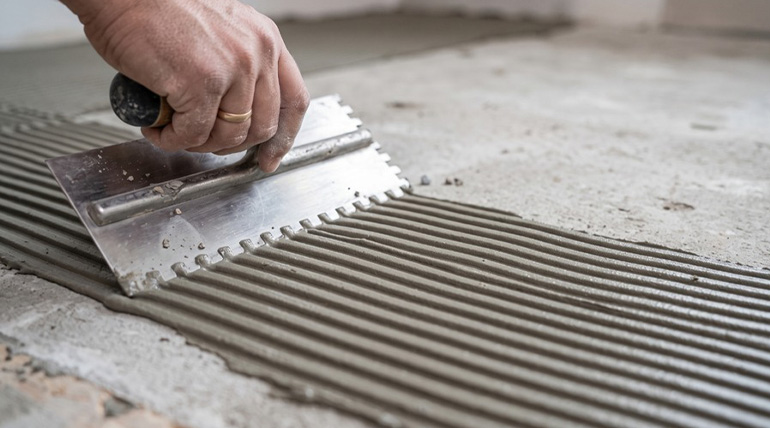
Tile adhesive can be applied in a controlled layer using a suitable notched trowel. When the tile is properly pressed into the adhesive, the trowel ridges creates consistent contact with the substrate.
Adequate coverage reduces air pockets and unsupported areas beneath the tile. Large-format and heavy tiles may also require back-buttering, where adhesive is applied to both the substrate and the back of the tile.
Flexible adhesives are therefore an important part of effective tile debonding solutions, helping reduce hollow-sounding tiles, gradual loosening and localised uplift. However, adhesive alone cannot compensate for structural defects, missing movement joints or poor surface preparation.
Essential Tiling Practices to Prevent Hollow Uplift
Even the best adhesive cannot perform effectively if the basic installation requirements are ignored.
Prepare the Substrate
The surface should be firm, level, clean and sufficiently cured. Dust, grease, paint, laitance and loose particles must be removed. Existing cracks, uneven areas and moisture problems should be assessed and treated rather than concealed beneath the tiles.
Provide Movement Joints
Movement accommodation should be planned around room perimeters, doorways, columns and long tiled areas. Existing structural joints must be continued through the tiled finish and should never be covered.
The location and spacing of joints should follow the project design, relevant installation standards and manufacturer recommendations.
Apply Adhesive Correctly
Use a notched trowel suited to the tile size and application. Spread the adhesive evenly and maintain a consistent trowel direction so the ridges collapse properly. Random dabbing or spot fixing should be avoided because it creates voids beneath the tile.
Back-buttering may be required for large-format, heavy or deeply profiled tiles to improve coverage and reduce unsupported areas.
Follow Mixing and Curing Instructions
Mix the adhesive with the specified quantity of clean water. Adding excess water or other materials can affect its performance. Follow the recommended mixing time, pot life, open time and application thickness.
Tiles should be installed before the adhesive develops a surface skin. The finished area must also be protected from traffic, water and heavy loads until the adhesive has cured adequately.
Choosing the Right Adhesive Matters
Tile popping may appear to be an aesthetic problem, but it quickly becomes a cost and performance issue. Repairing a tented floor involves removing tiles, preparing the substrate again, applying fresh adhesive and re-grouting. Since surrounding tiles may also be affected, repairs often extend beyond the visibly damaged area.
This is why homeowners, contractors and consultants are increasingly choosing tested, branded adhesive systems over unverified alternatives. Selection should consider compatibility, tensile adhesion, flexibility, application conditions and expected service life—not only the initial price.
This reflects a broader shift towards product reliability, technical documentation and performance-led brands. Read more in these insights from Walplast leadership on trust-led construction materials.
For living rooms, corridors, balconies and other surfaces exposed to movement or temperature changes, explore HomeSure’s flexible tile adhesive range and select a polymer-modified product suited to the tile, substrate and application.
A durable tiled surface depends on what lies beneath it. Combining the right flexible tile adhesive with a stable substrate, sufficient coverage, suitable movement joints and skilled application can significantly reduce tile popping, tenting and debonding.