
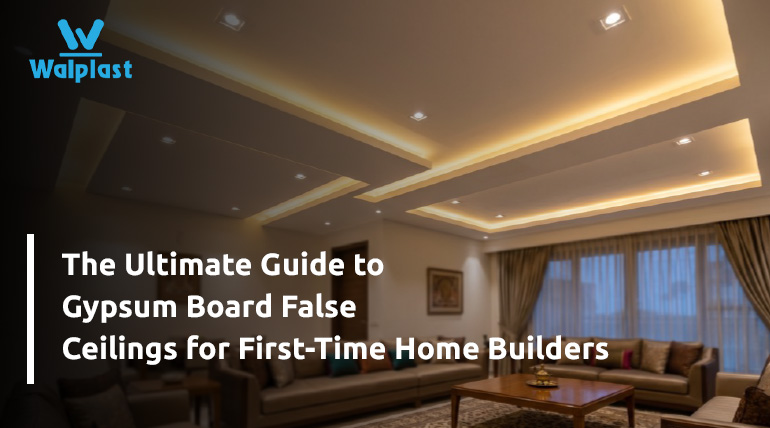
Building your first home is both exciting and overwhelming. It feels like every choice you make is permanent, and the choices you make about your ceilings are some of the most obvious. If you’ve been browsing interior inspiration boards lately, there’s a good chance you’ve come across sleek, layered ceilings with recessed lighting and clean geometric lines. That’s the work of a gypsum board false ceiling, and it’s become the go-to choice for modern Indian homes. Here’s everything a first-time builder needs to know.
What Is a Gypsum Board False Ceiling?
A false ceiling is a secondary ceiling installed below the original structural ceiling, creating a gap between the two. With that gap, you can hide AC ducts, run electrical wiring, install recessed or LED lighting, and create architectural effects that you couldn’t do any other way.
Gypsum boards are the most popular material for false ceilings today, replacing older materials like cement mold, POP design (Plaster of Paris) and wooden panels. They’re lightweight, versatile, fire-resistant, and available in large handleable sheets that can be shaped, cut, and finished to virtually any design.
Designing a Modern False Ceiling for the Living Room
The living room is where a false ceiling for the living room makes the biggest impact. It’s the first space guests see, and it sets the tone for your entire interior.
Here are some of the benefits. that double as design features
False ceilings aren’t just for looks; they also solve real problems:
● Concealment: Exposed wiring, junction boxes, and AC ducts are hidden cleanly above the false ceiling layer, giving your living room a finished, clutter-free look.
● Built-in lighting: The space between ceilings is perfect for modern LED strip lights, recessed spotlights, and cove lighting, which you can’t do with a plain structural ceiling.
● Acoustic insulation: Gypsum boards absorb sound and reduce echo significantly. In open-plan living rooms, this makes conversations more comfortable and reduces noise transfer between floors.
The result is a ceiling that works as hard as it looks good.
Unlocking Creativity with Gypsum Sheet Design
Where gypsum truly outshines older materials is in design flexibility. Gypsum sheet design can go as simple or as dramatic as your vision demands.
Popular design styles for 2024 homes:
● Tray ceilings: These have a central panel that is set back from the wall. This gives the room depth and a sense of height, and it works well in medium- to large living rooms and master bedrooms.
● Geometric patterns: Coffered grids, hexagonal panels, and angular drop sections that create strong visual interest.
● Cove lighting designs: A perimeter ledge that conceals indirect LED lighting, casting a warm ambient glow across the ceiling.
● Multi-level drops: Two or three stepped levels that define zones in open-plan spaces without needing walls.
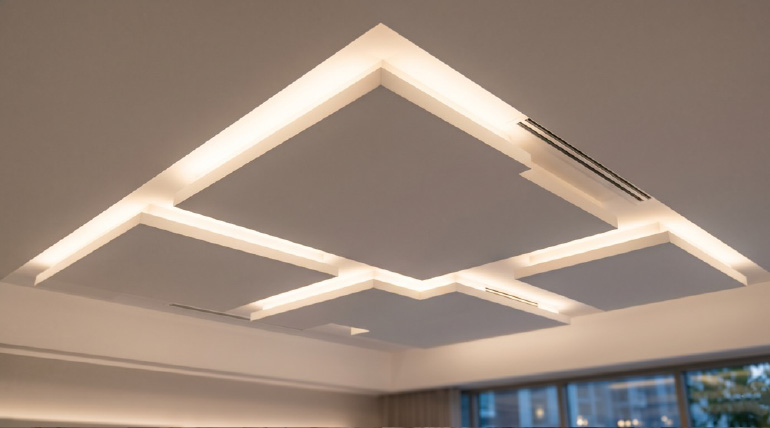
HomeSure Gypsum Boards are engineered to adapt to all of these. Because they are flexible, you can make curved and geometric shapes without the help of a professional, and because they are rigid, the finished ceiling will stay straight and not sag over time, which is something that cheaper boards often fail to do.
Two properties make HomeSure Gypsum Boards especially well-suited for homes:
● Lightweight strength: The boards are easy to handle and install without adding excessive load to the structure, yet they resist sagging and deformation for years.
● Natural fire resistance: Gypsum contains chemically bound water within its mineral structure. In the event of fire, this water is released as steam, actively slowing the spread of flames. There isn’t a coating that can come off; it’s part of the material itself.
What to Expect During Gypsum Board Ceiling Installation?
One of the biggest advantages of choosing gypsum is how painless gypsum board ceiling installation is compared to traditional methods. The difference is clear to anyone who has been through a POP ceiling installation, which takes more time and involves wet plaster & cracks, more dust, and more drying time.
The installation process, step by step:
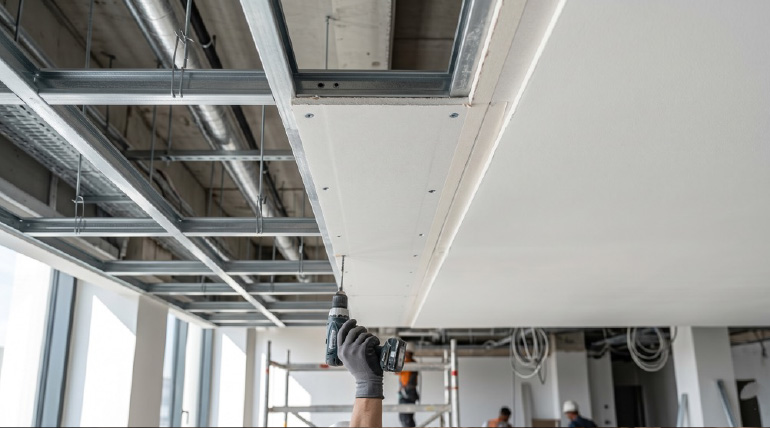
1. Metal framework: Installers fix a grid of metal channels to the structural ceiling and walls, creating the skeleton that determines the ceiling’s height and shape.
2. Board mounting: Gypsum boards are screwed directly onto the metal frame. Large sheets mean fewer joints and faster coverage.
3. Joint finishing: The seams between boards are taped and filled with joint compound, then sanded smooth so the ceiling reads as one continuous surface.(Dusting happens here)
4. Final finish: A skim coat or primer is applied, and the ceiling is ready for paint.
There is no water, mixing, or waiting for the plaster to dry during the whole process. This keeps your site clean, reduces construction waste, and gets your ceiling done in a fraction of the time a traditional POP ceiling would take.
For more on planning smart, modern interior layouts that work alongside your false ceiling design
Is a Gypsum Board False Ceiling Right for Your Home?
For first-time builders, the answer is almost always yes. Here’s a quick summary of why:
● Hides wiring, ducts, and structural imperfections cleanly
● Enables modern LED and cove lighting setups
● Reduces echo and improves room acoustics
● Very adaptable. Works with any design, from simple to dramatic (variety of design )
● Naturally fire-resistant without additional treatments
● Fast, clean installation with no wet mess
HomeSure Gypsum Boards by Walplast give your new home the consistent quality, reliable performance, and design flexibility it deserves. They are made for Indian building conditions.
Your ceiling is one of the largest surfaces in any room. Make it count.
Conclusion
A gypsum board false ceiling is one of the smartest investments a first-time home builder can make. It turns a plain structural ceiling into a design feature, hides things like wiring and AC ducts, improves soundproofing, and adds a natural fire safety layer. It’s easy to install and doesn’t take long.
The key is choosing the right board. HomeSure Gypsum Boards by Walplast are built to deliver consistent quality, design flexibility, and long-term performance in Indian homes. You can use GypEx to make a simple tray ceiling in the bedroom or a complex multi-level cove design in the living room. It will look stunning and last a long time.
Plan smart, build once, and enjoy ceilings that look professionally designed for years to come.