
Large format and vitrified tiles are essential to modern architecture because they look great, have few grout lines, and have a high-quality finish. But as they become more popular, you need to choose the right adhesive for large-format tiles.
Modern tiles are heavier, denser, and less porous than older ones, which makes installation more difficult. Regular cement mortar isn’t enough anymore, and choosing the wrong adhesive can cause tiles to slip, hollow sounds, or long-term failure.
This is where high-tech solutions, like Walplast’s HomeSure range of products, become critical to guaranteeing durability and performance.
What are Large Format Tiles?
Large-format tiles are usually tiles that are longer than 600 mm on at least one side. They are often used to make surfaces that look smooth and have fewer joints.
High-temperature processes are used to make vitrified tiles, which are usually available in large sizes.
● Extremely dense
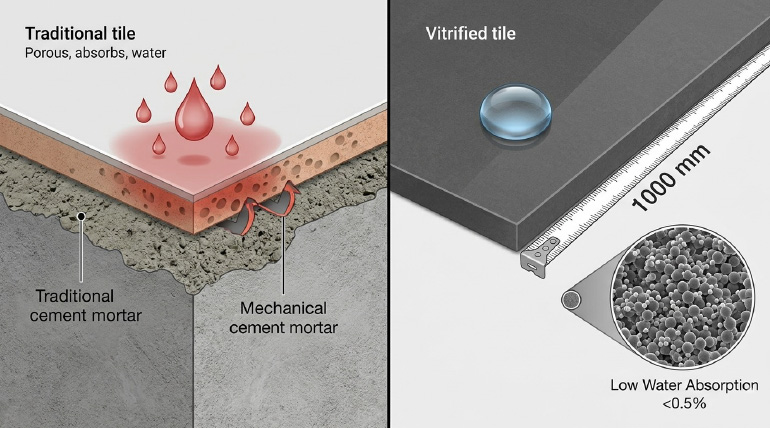
● Low in water absorption (~0.5%)
● Highly durable and stain-resistant
While these properties enhance performance, they also reduce natural bonding capability, making it essential to use a vitrified tile fixing compound instead of traditional mortar.
Additionally, larger tiles require greater precision during installation, as even minor errors can lead to visible defects.
The “Weight” Factor: Why Traditional Cement Fails?
One of the biggest challenges with large-format tiles is the combination of high weight and low porosity.
Here is why traditional cement falls short:
● Relies on mechanical bonding, which is ineffective on smooth, low-porosity vitrified tiles.
● Poor adhesion due to minimal water absorption in vitrified surfaces.
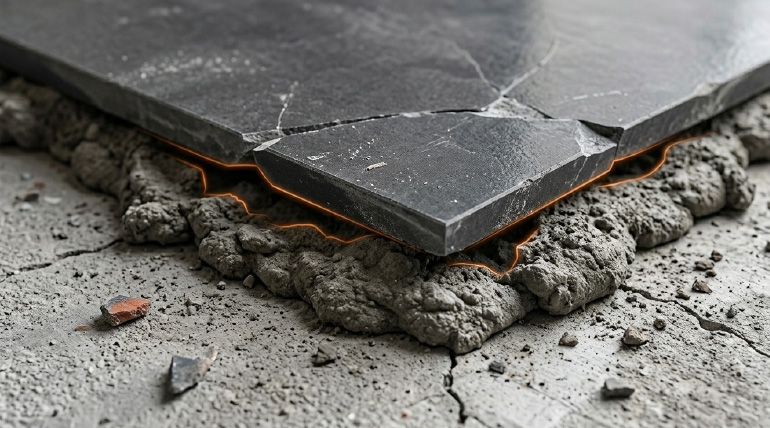
● Shrinkage during curing, leading to voids beneath tiles.
● Creates uneven support, increasing stress points.
● Low load-bearing capacity, unable to support heavy large-format tiles over time.
● Higher chances of air gaps, resulting in hollow sounds.
● Increased risk of cracking under pressure.
● This can lead to tile debonding in the long run.
Modern tile adhesives offer a far more reliable solution for large-format and vitrified tiles. Unlike traditional cement, these adhesives are polymer-modified and form a strong chemical bond with the surface, ensuring better grip even on low-porosity tiles.
They provide enhanced load-bearing capacity, minimal shrinkage, and uniform support across the tile, significantly reducing the chances of cracks, hollow spots, or tile failure. This makes them the preferred choice for achieving a durable and long-lasting tile installation.
Why Do You Need a Heavy-Duty Tile Adhesive?
Large format and vitrified tiles need more than just regular heavy tile wall adhesive to stick together. They need high-performance, polymer-modified adhesives that can handle their size, weight, and lack of pores. A heavy-duty adhesive ensures strong, reliable fixation and long-term durability, especially in demanding applications.
For instance, products like HomeSure TileEx EX-44, Ex 344 W, Ex 55, Ex 456 Wfrom Walplast are specifically designed for vitrified and large-format tiles, offering enhanced bonding strength and durability
Here are some of the key features to look at:
High Bonding Strength
Ensures a firm grip between the tile and substrate, even for large and heavy tiles, reducing the risk of detachment over time.
Flexibility to Absorb Stress
Allows the adhesive to accommodate slight structural movements and temperature variations, preventing cracks and bond failure.
Sag Resistance (Anti-Slip Property)
Particularly important for wall applications, the prevents large tiles from slipping down after installation.
Extended Open Time
Provides more working time to position and adjust large tiles accurately without compromising adhesion.
Application Technique Matters as Much as the Adhesive
Even the best adhesive cannot compensate for poor application. For large format and vitrified tiles, the technique used during installation plays a crucial role in ensuring durability, strength, and a flawless finish.
1. Using the Right Notched Trowel
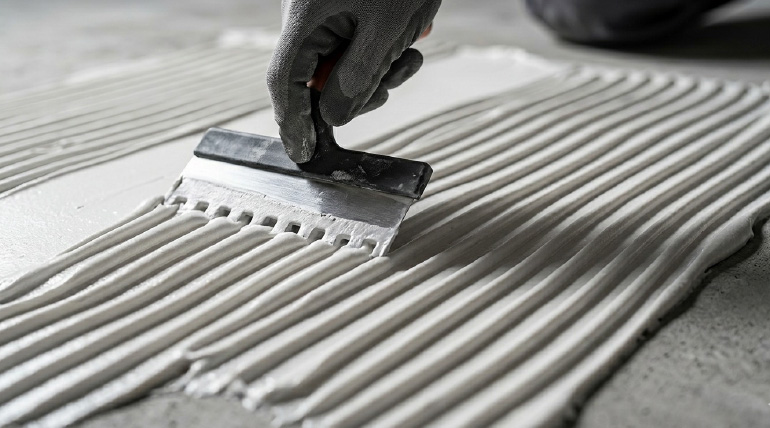
A notched trowel is essential for achieving uniform adhesive distribution and consistent thickness across the surface. For large format tiles, using a larger notch size helps ensure that enough adhesive is applied to support the tile’s weight.
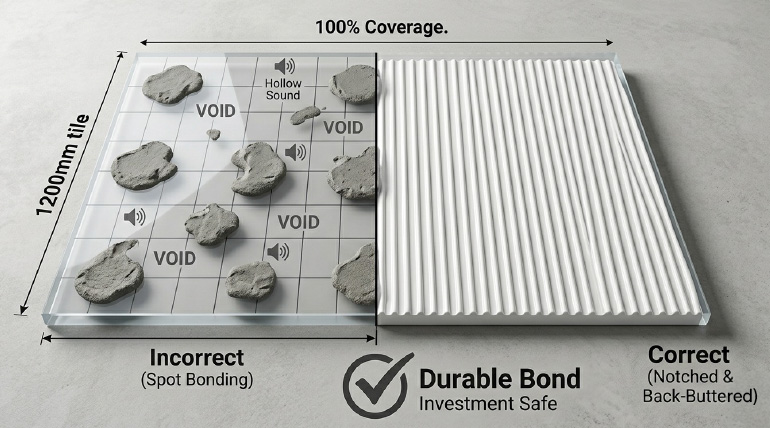
Spreading the adhesive evenly creates ridges that improve contact between the tile and the substrate. This method not only enhances bonding strength but also helps eliminate air gaps that can weaken the installation over time.
2. Back-Buttering Technique
Back-buttering involves applying a thin layer of adhesive to the back of the tile in addition to the substrate. This technique is especially important for large-format tiles, as it ensures better contact across the entire surface area. By filling in any unevenness, back-buttering reduces the chances of voids and hollow spots. It also significantly improves bonding strength, making the installation more stable and durable in the long run.
3. Ensuring Proper Coverage
Achieving proper adhesive coverage is critical when working with large-format tiles. Ideally, at least 90–95% of the tile surface should be in contact with the adhesive. Inadequate coverage can lead to weak bonding, hollow sounds, and even tile breakage under pressure. By combining correct trowel usage with techniques like back-buttering, installers can ensure full coverage, resulting in a stronger bond and a more reliable, long-lasting finish.
Choosing the Right Adhesive for Different Conditions
Selecting the right adhesive depends on several factors that directly impact performance and durability:
● Tile Type & Size
Larger and heavier tiles require high-strength adhesives, while vitrified tiles need polymer-modified solutions for better bonding.
● Surface Type
Different substrates like concrete, plaster, or existing tiles require compatible adhesives, and the surface must always be clean, level, and dry.
● Application Area
Wall applications need anti-sag adhesives, wet areas require water-resistant properties, and outdoor spaces demand weather-resistant solutions.
● Environmental Conditions
Temperature and humidity can affect curing time and bonding strength, making it important to choose adhesives suited to site conditions.
Solutions from HomeSure are designed to address these varied requirements, making them suitable for both residential and commercial applications.
For example, exterior and high-moisture areas may require solutions like HomeSure TileEx EX-44, Ex 344 W, Ex 55, Ex 456 W, while multi-surface applications can benefit from versatile options like EX-55 All Tile Expert.
Benefits of Using Modern Tile Adhesives
Switching to advanced tile adhesives offers several advantages over traditional cement, especially when working with large-format and vitrified tiles.
● Strong and Reliable Bonding
Provides superior adhesion even on low-porosity surfaces, ensuring tiles stay firmly in place over time.
● Faster and Cleaner Installation
Ready-to-use formulations reduce preparation time and minimize mess compared to traditional cement mortar.
● Reduced Shrinkage and Cracks
Minimal shrinkage during curing helps prevent cracks and voids beneath tiles.
● Better Finish with Fewer Defects
Ensures even support across the tile surface, reducing chances of lippage, hollow sounds, or uneven finishes.
● Long-Term Durability
Enhanced strength and flexibility contribute to a longer-lasting installation with lower maintenance needs.
● Extended Working Time
Allows installers more time to position and adjust tiles accurately before the Walplast heavy-duty adhesive sets.
Using trusted solutions such as those from Walplast ensures consistent performance across a wide range of applications.
Conclusion
Large format and vitrified tiles make any room look better, but choosing the right adhesive and using it correctly are very important for a successful installation.
The old ways of using cement aren’t good for tiling these days. Heavy-duty adhesives modified with polymers, along with the right methods like notched trowel application and back-buttering, make sure a strong bond lasts.
You can be sure of both performance and peace of mind when you choose reliable solutions like Walplast’s HomeSure range.
In the end, the right adhesive does more than just stick tiles together; it also keeps your investment safe for years to come.