
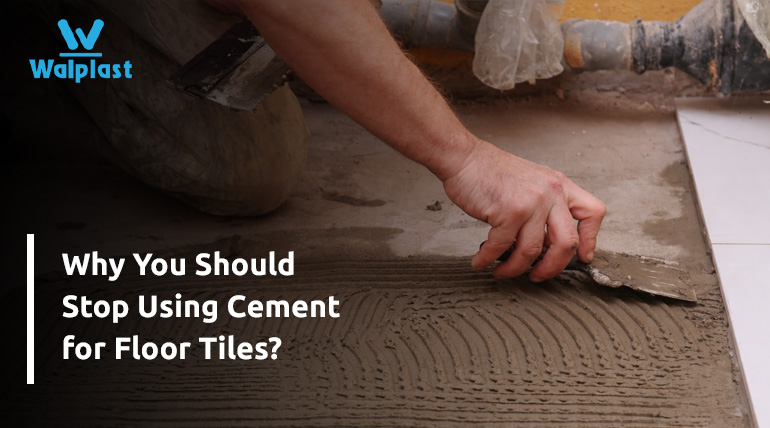
For many years, cement has been the most common material used for fixing floor tiles. While it was considered reliable in the past, modern construction needs have changed. Today’s tiles are larger, thinner, and more refined, and they demand better bonding solutions to ensure durability and performance.
This is where tile adhesive comes in. Designed specifically for tile installation, tile adhesive offers stronger bonding, better flexibility, and improved finish compared to traditional cement.
When comparing tile adhesive vs cement, it becomes clear why cement is no longer the best choice for floor tiles. Understanding the benefits of using the best tile adhesives can help you achieve long-lasting, crack-free, and professionally finished floors.
Key Insights
- Cement is no longer suitable for fixing modern floor tiles due to weak bonding and cracking issues.
- Tile adhesive is specially designed to provide strong and long-lasting tile bonding.
- Modern tiles require flexible materials, which tile adhesive handles better than cement.
- Tile adhesive helps achieve a cleaner, more even, and professional floor finish.
- Using the best tile adhesives reduces tile failures and long-term maintenance issues.
What is Tile Adhesive?
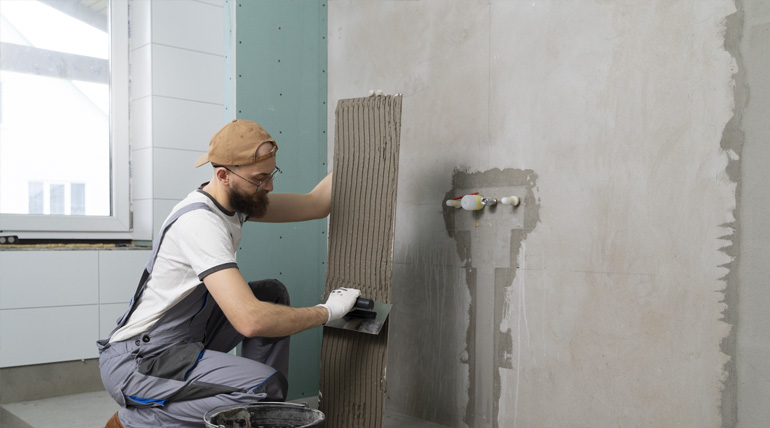
Tile adhesive is a special bonding material used to fix tiles on floors and walls. It is made to hold tiles firmly in place and give a strong, long-lasting grip. Tile adhesive comes as a ready mix powder that you combine with water, then apply with a trowel.
It works better than cement for many modern tile installations because it offers strong bonding and better flexibility. It is commonly used for ceramic tiles, vitrified tiles, and large-format tiles. It also helps in getting an even finish and reduces the chances of tiles becoming loose over time.
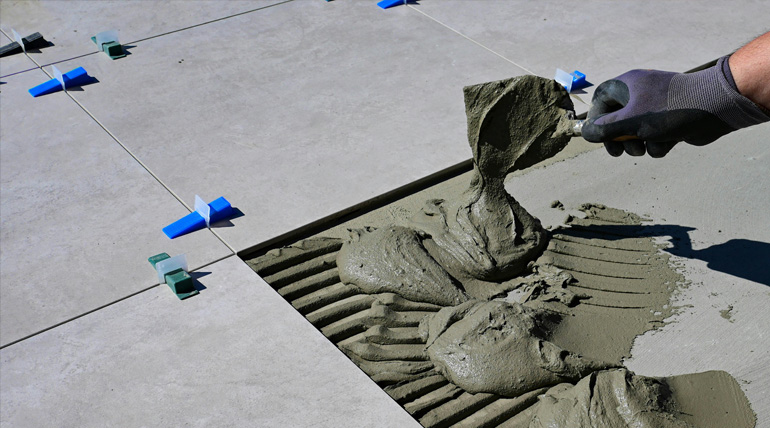
Limitations of Using Cement for Floor Tiles
Here are some of the limitations of using cement for floor tiles:
- Cement does not bond as strongly as tile adhesive, especially for modern tiles.
- Cement can shrink while drying, which may lead to cracks and loose tiles.
- It often creates uneven tile levels, which affects the final floor finish.
- Hollow spots can form under tiles, which can cause tiles to sound hollow or break.
- Cement absorbs water more easily, which can weaken the bonding over time.
- It needs a thicker layer, which increases material use and mess at the site.
- Cement work usually takes more time and depends heavily on the worker’s skill for good results.
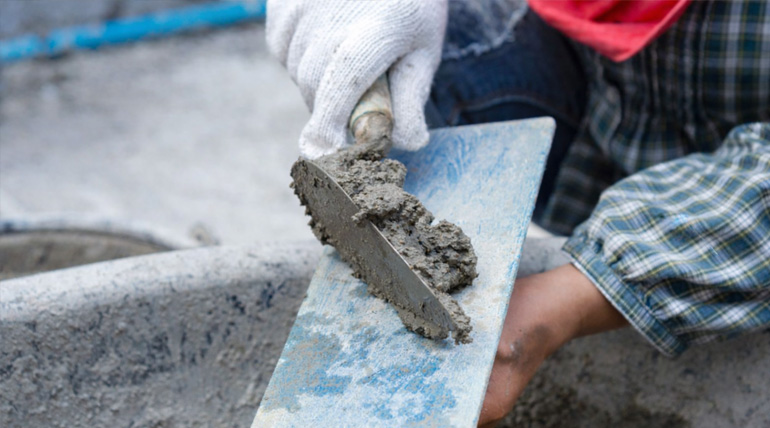
Choosing the best tile adhesives from reliable brands like Walplast can improve installation quality and reduce tile-related issues.
Tile Adhesive vs Cement: Key Differences
Here are some of the key differences between tile adhesive and cement:
- Bonding strength: Tile adhesive provides a stronger grip, while cement bonding can weaken over time.
- Flexibility: Tile adhesive handles small movement and temperature changes better, while cement is more rigid and can crack.
- Application thickness: Tile adhesive works in a thin layer, while cement needs a thicker bed to set tiles properly.
- Finish and leveling: Tile adhesive helps achieve better tile alignment and an even finish, while cement can lead to uneven levels.
- Hollow tile chances: Tile adhesive reduces hollow spots under tiles, while cement often creates hollow patches if not applied perfectly.
- Water resistance: Tile adhesive offers better resistance in damp areas, while cement absorbs water and can lose strength.
- Speed and cleanliness: Tile adhesive is faster and cleaner to apply, while cement mixing and application can be messy and time-consuming.
- Suitability for modern tiles: Tile adhesive is ideal for vitrified and large-format tiles, while cement struggles to hold these tiles effectively.
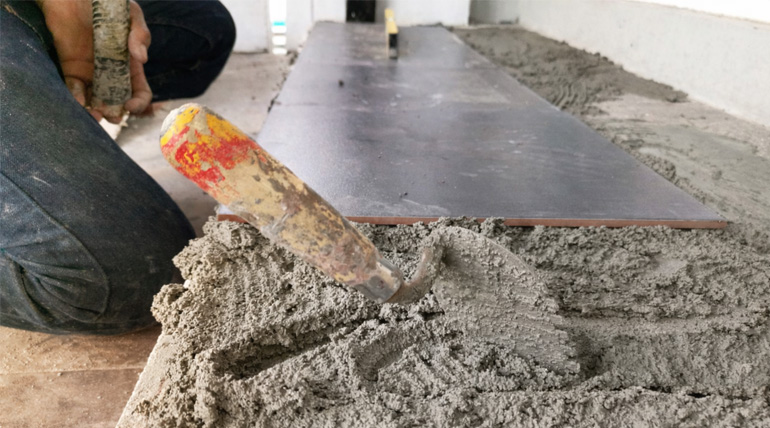
Advantages of Using Tile Adhesive
Here are some of the advantages of using tile adhesive:
- Tile adhesive provides strong and long-lasting bonding for floor tiles.
- It offers better flexibility, which helps tiles handle minor movement and temperature changes.
- Tile adhesive works in a thin layer, helping achieve a neat and even floor finish.
- It reduces the chances of hollow or loose tiles after installation.
- Tile adhesive sets faster, which saves time during tile fixing.
- It is suitable for modern tiles, including vitrified and large-format tiles.
- Tile adhesive improves water resistance, especially in kitchens and bathrooms.
- It results in a cleaner, more professional-looking tile installation.
Why Tile Adhesive Is the Best Choice for Modern Flooring?
Here is why tile adhesive is the best choice for modern flooring:
- Modern tiles are often large, thin, and 0 -porosity, so they need a stronger bonding material than cement.
- Tile adhesive is made specifically for tile fixing, so it provides better grip and long-term durability.
- It supports large-format and vitrified tiles without increasing the risk of tiles coming loose.
- Tile adhesive allows a thin and even application, which improves tile leveling and overall floor finish.
- It reduces hollow spots under tiles, which helps prevent cracks and tile breakage later.
- Tile adhesive is more flexible than cement, so it handles temperature changes and minor structural movement better.
- It is faster and cleaner to use, which makes installation more efficient and professional.
Choosing the Best Tile Adhesives
Here is how you can select the best tile adhesives:
- Look for tile adhesives that are suitable for the type of tiles you are installing, such as ceramic, vitrified, or porcelain tiles.
- Choose products with strong bonding properties to ensure tiles stay fixed for many years.
- Select adhesives that work well with both floor and wall applications if needed.
- Check for water-resistant or waterproof formulations for wet areas like bathrooms and kitchens.
- Consider quick-setting or fast-drying adhesives to speed up the installation process.
- Use reputable and quality-tested brands to avoid future issues like tile lifting or cracks.
- Always follow the manufacturer’s instructions for best results and long-lasting performance.
Common Myths About Tile Adhesive
Here are some of the common myths about tile adhesives:
Myth: Tile adhesive is too expensive.
Tile adhesive may cost more per bag, but it can reduce tile failures, repairs, and wastage, so it often saves money in the long run.
Myth: Cement is always stronger than tile adhesive.
Cement is not designed for modern tiles, while tile adhesive is made for strong bonding and better performance.
Myth: Tile adhesive is only for walls, not floors.
Many tile adhesives are specially made for floor tiles and heavy-duty use.
Myth: Tile adhesive does not work for large tiles.
Tile adhesive is actually one of the best options for vitrified and large-format tiles.
Myth: Using tile adhesive is complicated.
Tile adhesive is easy to use when mixed correctly and applied with the right trowel.
Myth: Tile adhesive is not durable.
Good-quality tile adhesives provide long-lasting bonding and better resistance to daily wear.
Myth: Any tile adhesive works for every area.
Different areas need different adhesives, like water-resistant options for bathrooms and stronger grades for outdoor use.
Conclusion
Using cement for fixing floor tiles may have worked in the past, but it no longer meets the needs of modern flooring. Today’s tiles require stronger bonding, better flexibility, and a cleaner finish, which cement often fails to provide. Problems like hollow tiles, cracks, and uneven surfaces are common when cement is used.
Tile adhesive is designed specifically for tile installation and offers clear advantages over cement. When comparing tile adhesive vs cement, tile adhesive stands out for its durability, ease of application, and compatibility with modern tiles.
Choosing the best tile adhesives helps ensure long-lasting, crack-free floors with a professional finish, making tile adhesive the smarter and more reliable choice for modern flooring projects.