
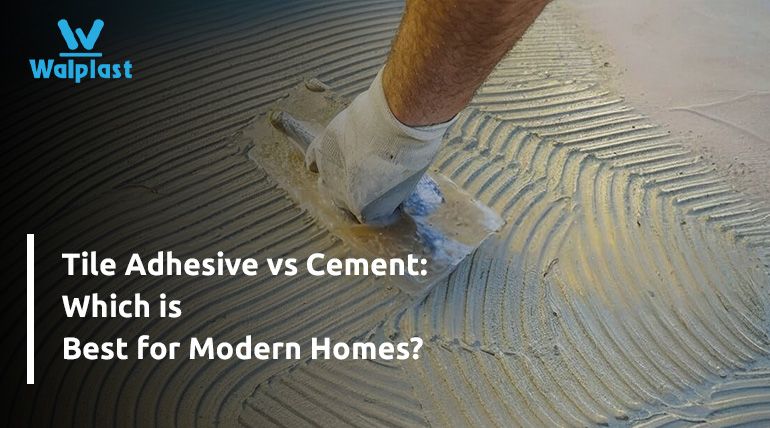
When it comes to tile installation, choosing between tile adhesive vs cement can directly impact durability, finish quality, and long-term maintenance. Traditional cement mortar has been used for decades, but more and more modern construction is switching to more advanced tile adhesives because they work better.
Knowing the difference between these two types of tiles is important if you want them to last for years, not crack, and look great.
What is Tile Adhesive?
Tile adhesive is a polymer-modified bonding compound that is made to stick tiles to floors and walls. In contrast to regular cement, it sticks well, is flexible, and applies evenly.
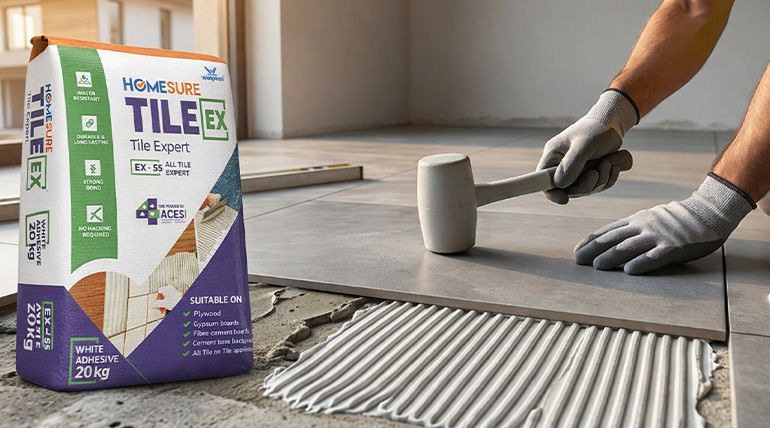
Walplast’s HomeSure TileEx range is made to handle modern building challenges, such as large-format tiles, floors that get a lot of use, and areas that tend to get wet.
What is Traditional Cement Mortar?
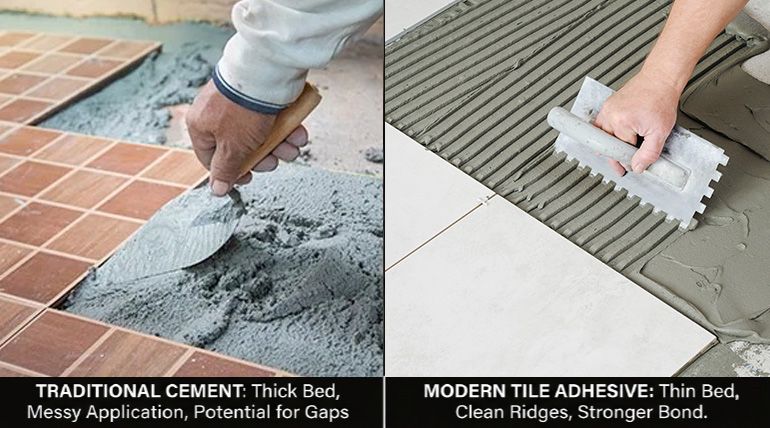
Traditional cement mortar is made of cement, sand, and water, and it is used to stick tiles together. Even though it saves money at first, it is not flexible and often has problems over time, such as tiles breaking, hollow sounds, and uneven finishes.
Tile Adhesive vs Cement: Key Differences
Parameter | Tile Adhesive | Traditional Cement |
Bonding strength | High (polymer-modified) | Moderate |
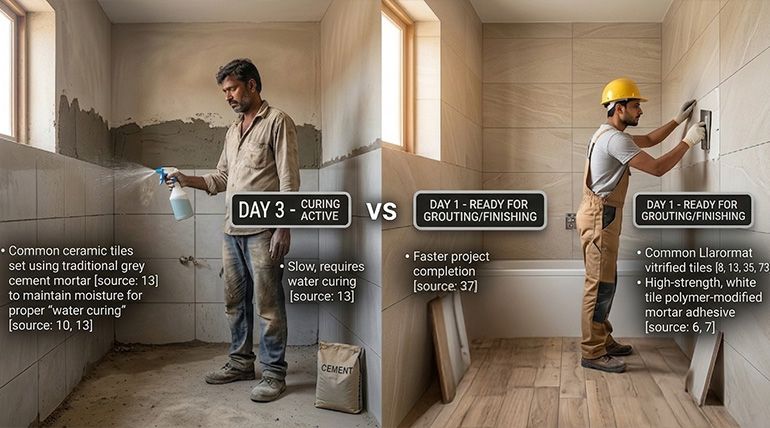
Curing Time | Faster, no soaking needed | Slow, requires water curing |
Shrinkage | Minimal | High, can cause cracks |
Tile Compatibility | Works with large & vitrified tiles | Limited compatibility |
Application Thickness | Thin layer (3–5 mm) | Thick layer (20–25 mm) |
Finish Quality | Smooth and even | Uneven, requires skill |
Durability | Long-lasting | Can weaken over time |
Cost-Effectiveness | Better long-term ROI | Lower initial cost |
Verdict: Tile adhesive clearly outperforms cement in durability, finish, and efficiency, making it ideal for modern homes.
Common Problems with Cement (and How Tile Adhesive Fixes Them)
Here are some problems that cement often has and how tile adhesive can fix them:
1. Hollow-Sounding Tiles
One of the biggest problems with cement is that it doesn’t always stick together properly, leaving gaps between tiles. This makes the sound hollow and the placement of the tiles weak.
Solution:
Walplast’s polymer-modified adhesives make sure that the whole surface is bonded, getting rid of any air pockets and making the bond stronger.
2. Tile Cracking Over Time
As cement dries, it shrinks, which puts stress on the tiles and causes them to crack over time.
Solution:
If you are wondering how to prevent tile cracking, you need to switch to products like HomeSure TileEx EX-344 W. Such products offer flexibility, allowing tiles to adjust to minor movements without cracking.
3. Uneven Finish
To use traditional mortar, you need to be skilled. Not level tiles can happen even if the mistakes are small.
Solution:
Adhesives for tiles have a consistent thickness and are easy to use, so anyone can get a smooth finish.
4. Water Damage in Wet Areas
Bathrooms and kitchens are often wet places where cement often fails.
Solution:
Walplast tile adhesives are made to resist water, so they work great in damp places.
Why Do Modern Homes Prefer Tile Adhesives?
Large-format tiles, vitrified surfaces, and shorter timelines are used in modern construction, which traditional cement can’t handle well.
Tile adhesives offer:
● Faster project completion
● Better bonding with modern tiles
● Reduced material usage
● Long-term durability
This is why leading builders and contractors increasingly rely on solutions like the Walplast Tile Adhesives range.
How to Apply Tile Adhesive Correctly (Step-by-Step)
Following this step-by-step guide will help you properly use tile adhesive:
1. Prepare the Surface
Make sure the surface is dust- and grease-free, clean, and dry.
2. Mix the Adhesive
You need to mix the glue powder with water until you get a smooth, lump-free paste.
3. Apply Using a Notched Trowel
Use a notched trowel to spread the glue out evenly and make ridges for better grip on wall and tile.
4. Place the Tile
Place the tile where you want it and press it firmly into the glue.
5.Check Alignment
Use spacers to keep the gaps and alignment even.
6.Allow Proper Setting Time
Don’t touch the glue while it’s setting before you add the grout.
Cost Comparison: Is Tile Adhesive Worth It?
Even though cement may seem cheaper at first, it often leads to
● Higher labour costs
● Tile replacement due to cracks
● Maintenance issues
Adhesives for tiles, especially more advanced ones like HomeSure TileEx EX-456 W, are more valuable in the long run because they last longer and need fewer repairs.
Final Verdict
When it comes to modern homes, it’s easy to see which is better: tile adhesive or cement. Tile adhesive sticks to tiles better, is easier to use, and lasts longer than cement, which has trouble keeping up with today’s building needs.
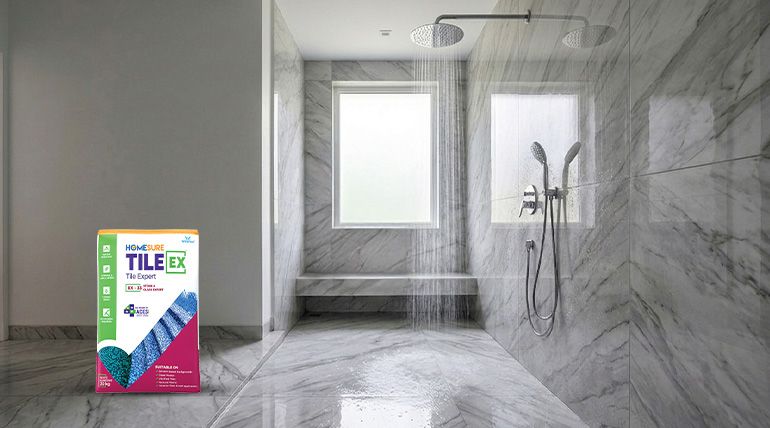
Walplast’s HomeSure Tile Adhesives are a better choice if you want a finish that will last, keep tiles from cracking, and keep the structure strong.