
Vertical tiling has become a defining element in modern architecture, from interior feature walls to large-scale exterior cladding. However, installing tiles on walls presents challenges that are very different from floor applications. This is where Tile Adhesives play a critical role in ensuring safety, durability, long-term performance and creep performance.
If you know how tile adhesives work and how to use them correctly, you can make the difference between a perfect wall tile installation and one that keeps falling apart.
Key Insights
● Vertical tiling requires strong initial grip to counter gravity, making tile adhesives more reliable than traditional cement mortar.
● Tile Adhesives are engineered to provide immediate hold, reducing tile slippage and improving installation accuracy.
● Slip-resistant formulations help maintain uniform joint lines without the need for temporary supports or repeated adjustments.
● Exterior cladding is exposed to continuous thermal and moisture-related movement, which rigid cement mortar cannot absorb effectively.
● Flexible, polymer-modified tile adhesives accommodate expansion and contraction, reducing the risk of tile debonding and grout cracks.
● Achieving near 100% adhesive coverage is critical for long-term wall tile performance, especially in vertical and exterior applications.
Gravity force vs. Grip: The Core Challenge of Vertical Tiling
Unlike floor tiling, vertical applications must constantly resist gravity. When traditional cement mortar is used, tiles often begin to slip downward before the material gains strength. This results in uneven joint lines, frequent realignment, and extended installation time.
In wall tile installation, the adhesive must provide immediate grip while still allowing enough open time for accurate placement. Without this balance, installers must use spacers, temporary supports, or repeated adjustments, slowing productivity and increasing error risk.
This is why modern vertical tiling relies on tile adhesives specifically engineered for wall applications.
Why Non-Slip Tile Adhesives Matter?
High-quality tile adhesives are designed with non-slip or slip-resistant properties. These formulations hold the tile firmly in place as soon as it is pressed onto the wall, minimizing downward movement.
Benefits of slip-resistant adhesives include:
● Immediate tile stability after placement.
● Uniform joint spacing without constant correction.
● Faster installation with fewer supports.
● Improved accuracy on large-format and heavy tiles.
A slip-resistant adhesive is especially critical for vertical tiling tips involving ceramic, porcelain, or stone tiles, where weight can otherwise cause sagging during installation.
Exterior Cladding Challenges: Why Flexibility Matters More Than Rigidity?
Here are some of the common challenges:
● Exterior cladding is constantly subjected to sunlight, rainfall, humidity, and temperature changes, all of which place repeated stress on tiled wall systems.
● Both tiles and the underlying substrate expand when heated and contract when temperatures drop. These movements occur daily and seasonally, creating ongoing stress at the bonding interface.
● Traditional cement mortar lacks flexibility and cannot absorb repeated movement. Over time, this rigidity leads to stress buildup within the system.
● As stress accumulates, rigid systems often experience tile debonding, cracks in grout joints, and gradual deterioration of the exterior cladding layer.
● Modern Tile Adhesives are polymer-modified to introduce elasticity, allowing the bonding layer to adjust to movement rather than resist it.
● Flexible adhesives stretch slightly under stress and return to form, maintaining bond integrity even during temperature and moisture fluctuations.
● By accommodating movement, flexible tile adhesives reduce the risk of tile detachment and extend the lifespan of exterior cladding systems.
Step-by-Step: Notched Trowel Method for 100% Coverage
Achieving full adhesive contact between tile and substrate is essential for long-lasting performance, especially in vertical applications.
Step 1: Surface Preparation
Ensure the wall surface is clean, level, and free from dust, oil, or loose particles.
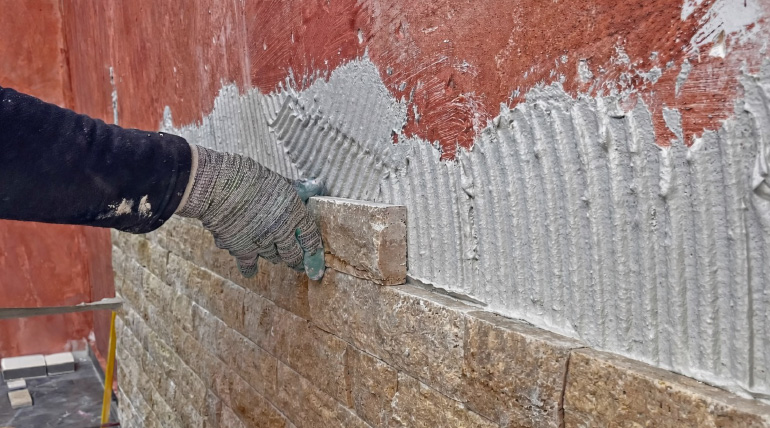
Step 2: Apply Adhesive with a Notched Trowel
Spread tile adhesive evenly using a notched trowel held at a 45-degree angle. The notches help control adhesive thickness and distribution.
Step 3: Back-Butter the Tile (If Required)
For large-format tiles or exterior walls, apply a thin layer of adhesive on the back of the tile to ensure complete contact.
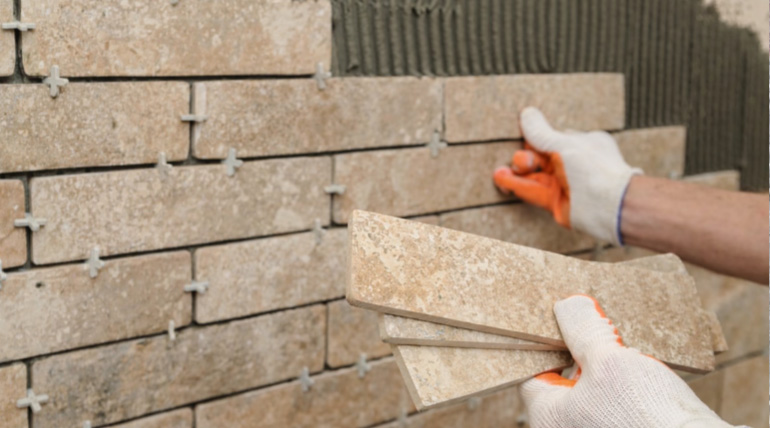
Step 4: Press and Align the Tile
Firmly press the tile onto the wall using a slight twisting motion to collapse the adhesive ridges and achieve near 100% coverage.
Step 5: Check Coverage and Alignment
Occasionally remove a tile to verify full adhesive transfer and adjust technique if necessary.
This method ensures strong bonding, minimizes voids, and enhances the long-term performance of vertical tiling systems.
Tile adhesives for vertical tiling and exterior cladding are available from trusted construction brands such as Walplast, ensuring consistent quality and dependable on-site performance.
Why Tile Adhesives Are Essential for Modern Wall Cladding?
As wall designs become more complex and materials heavier, tile adhesives have evolved from a convenience to a necessity. Their ability to provide immediate grip, flexibility, and consistent bond strength makes them indispensable for both interior wall tile installation and exterior cladding projects.
By using the right tile adhesive and following correct application techniques, installers can achieve safer installations, cleaner finishes, and structures built to last.
Conclusion
Vertical tiling is as much about material science as it is about craftsmanship. With gravity constantly at play and environmental forces affecting exterior walls, Tile Adhesives offer the grip, flexibility, and reliability that traditional methods cannot. Mastering their use is key to delivering durable, high-quality wall cladding in modern construction.