
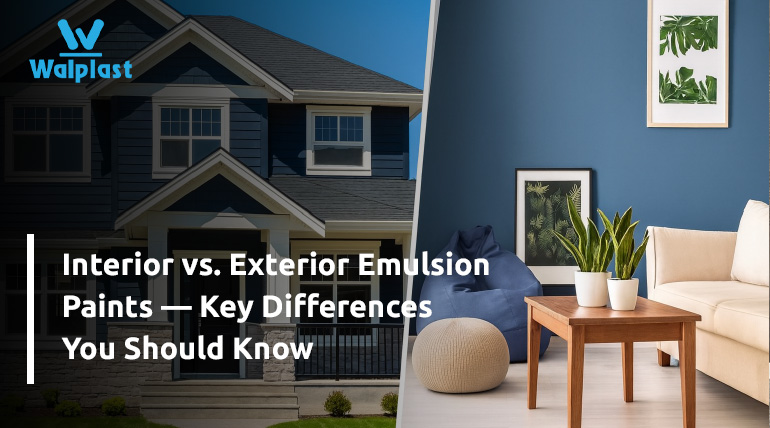
Choosing the right paint is more than selecting colours, it’s about giving your home the protection, personality, and performance it deserves. Every wall has a different story to tell, and the conditions it faces play a major role in how long the finish lasts. Interior walls deal with stains, touch marks, and daily activity, while exterior walls harsh sunlight, heavy rain, humidity, dust, and pollution. Because their challenges are different, they require paints formulated with specific properties. Using the wrong paint can lead to issues like fading, cracking, chalking, or peeling much sooner than expected. That’s why understanding the difference between interior and exterior emulsion paints is essential before choosing the right one for your space. In this guide, we will break down these differences clearly and explore how the HomeSure Mastertouch range—Bloom, Vivid, and Lush Emulsions offers the ideal blend of beauty, durability, and long-lasting protection for every wall, inside and outside.
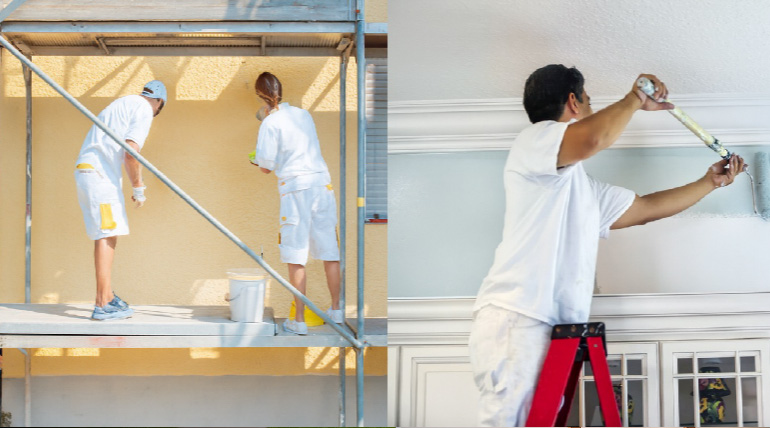
What Are Emulsion Paints?
Emulsion paints are water-based paints where pigments, binders, and additives are blended in a smooth, easy-to-apply formulation. They have become the most widely used wall paints because they offer a perfect mix of durability, finish, and safety. Unlike traditional solvent-based paints, emulsions dry quickly, have low odour, and are low in VOCs, making them safer for the occupants. Their advanced acrylic or co-polymer binders provide strong adhesion, superior washability, colour retention, and resistance to cracking. Whether for interior décor or exterior protection, emulsion paints deliver long-lasting performance with a clean, beautiful finish suitable for modern homes.
Interior vs. Exterior Emulsion Paints: How They Differ
Interior and exterior walls may belong to the same home, but the environment they face is entirely different, so their paint cannot be the same. Interior emulsions are created for beauty, smoothness, hygiene, and easy cleaning. They must handle everyday conditions such as fingerprints, stains, scuff marks, and indoor humidity. Their focus is on delivering a flawless finish while being safe, low-odour, and washable.
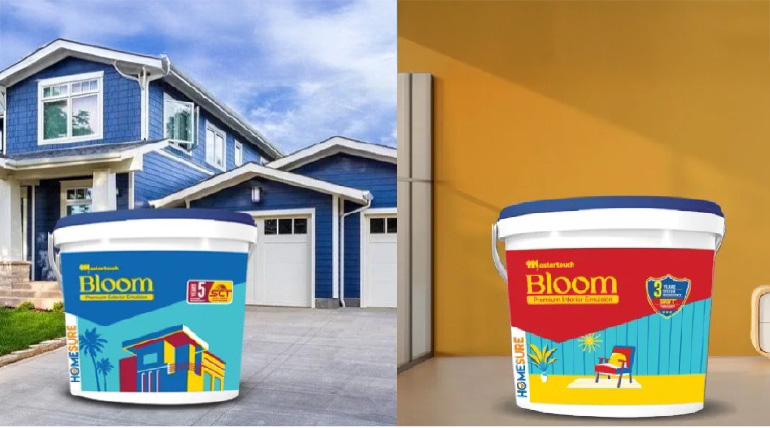
Exterior emulsions, on the other hand, act as the home’s shield. They are engineered to withstand harsh sunlight, UV rays, heavy rainfall, dust, pollution, and seasonal temperature swings. They prevent colour fading, peeling, algae growth, and cracking. Their chemistry is stronger, more durable, and enriched with weatherproof additives to protect the building for years.
Because the functional needs of both spaces are so different, the formulation of the paints also varies greatly. The table below highlights the key differences between interior and exterior emulsions to help you make an informed choice.
Comparison Table: Interior vs. Exterior Emulsion Paints
Parameter | Interior Emulsion Paints | Exterior Emulsion Paints |
Primary Purpose | Aesthetic enhancement, smoothness, and washability | Weather protection, durability, and long-term defence |
Exposure Conditions | Indoor spaces with controlled climate | Sun, rain, humidity, dust, pollution, and wind |
Key Functional Requirement | Stain resistance, easy cleaning, odour-free application | UV resistance, waterproofing, anti-fungal and anti-algal protection |
Durability Level | Medium to high (depending on grade) | Very high due to environmental exposure |
Additives Used | Stain-proofing agents, washability enhancers | UV absorbers, anti-fungal agents, flexible polymers, dust-resistance chemicals |
Flexibility of Paint Film | Lower flexibility, optimized for smooth surfaces | Higher flexibility to handle expansion/contraction of exterior walls |
Finish Options | Matte, soft sheen, luxe matte | Matte, smooth matte, weather-shield finish |
Surface Suitability | Best for smooth, plastered indoor surfaces | Suitable for rough, uneven, and textured exterior surfaces |
VOC Levels | Very low for safety indoors | Low, but slightly higher than interior due to weatherproof chemicals |
Protection Requirement | Scuff and stain resistance | Crack resistance, water beading, fungus/algae protection |
Resistance to Fading | Moderate (not exposed to sunlight directly) | Very high, specially formulated to resist UV fading |
Resistance to Moisture | Needed mainly in kitchens and bathrooms | Critical everywhere, especially in monsoon-prone regions |
Peeling/Chalking Resistance | Moderate | Very high—built to resist chalking, flaking, and peeling |
Application Environment | Applied indoors with minimal ventilation needs | Applied outdoors; needs favourable weather during application |
Price Range | Usually lower to medium | Slightly higher due to advanced technologies |
Interior and exterior emulsions serve two very different roles – one beautifies your home while the other protects it from the natural elements. Understanding these differences helps you make smarter decisions that save money, prevent future damage, and keep your walls looking fresh for years. With the right product selection, your interiors can feel warm and elegant while your exteriors stay strong, clean, and weatherproof.
HomeSure Emulsions — Bloom, Vivid & Lush
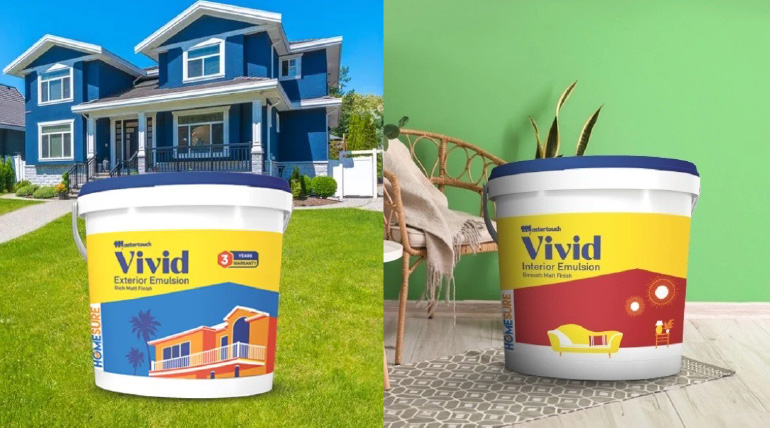
HomeSure’s Bloom, Vivid, and Lush emulsions offer a complete and high-performance painting solution for Indian homes. Bloom provides a rich sheen finish with Stay Clean Technology, ensuring excellent coverage, UV protection, and long-lasting beauty. Vivid delivers a smooth matt finish, superior washability, high opacity, and strong resistance to peeling, chalking, and fungal growth—ideal for vibrant, durable walls. Lush is designed for consistent performance, offering strong colour retention, good durability, smooth finish, and reliable protection against algae and black spots. Together, these emulsions ensure long-lasting finish, surface protection, and beautiful walls across all conditions.
Conclusion
Understanding the difference between interior and exterior emulsion paints is essential for choosing the right protection and finish for your home. While interior walls need smoothness, washability, and low-odour safety for daily living, exterior walls demand strong weather resistance to withstand sunlight, rain, humidity, pollution, and seasonal temperature shifts. Selecting the wrong paint can lead to premature fading, cracking, chalking, or peeling issues that not only diminish visual appeal but also increase long-term maintenance costs.
By recognising these functional differences, homeowners can make smarter, more durable choices that keep both their interiors and exteriors looking beautiful for years. This is where the HomeSure Mastertouch range—Bloom, Vivid, and Lush—stands out. Each emulsion is formulated with advanced technology to deliver the right balance of aesthetics and performance. Whether it’s Bloom’s rich sheen and UV protection, Vivid’s matt elegance with superior washability, or Lush’s reliable durability with strong colour retention, every variant is engineered to meet the unique needs of Indian homes.
When you choose the right emulsion, you’re not just painting walls, you are investing in long-lasting beauty, better protection, and a home that stays vibrant and resilient season after season.

Expert Tip: Follow the Right Sequence for a Flawless Wall Finish
For long-lasting, smooth, and durable walls, always follow the correct application process.
Start with Plaster – either Cementitious or Gypsum—to create a strong and even base. Once it sets, apply one coat of primer to seal the surface and improve adhesion. Next, use two coats of Wall Putty to achieve a smooth and blemish-free finish. After drying, apply a second coat of primer or Waterlock Expert for moisture protection and better paint hold. Finally, complete the process with two coats of high-quality paint for a rich, vibrant look that lasts.