
Choosing the right plastering material is no longer a routine decision. In today’s construction environment, builders and contractors are working with tighter timelines, high-rise execution challenges, labour constraints, and increasing expectations on finish quality. While sand–cement plaster has been the traditional choice for decades, gypsum plaster is steadily gaining preference in interior applications especially because it is significantly lighter and offers better site efficiency with consistent finish quality.
This shift is not driven by “trends.” It is driven by practicality. On large projects, small advantages add up—whether it is reduced dead load, faster readiness for finishing, lower rework, or improved indoor comfort. The smart approach is not to treat gypsum plaster as a universal replacement, but to understand where it performs best and where cement plaster still remains essential.
The Biggest Difference: Weight (Dead Load)
One of the most overlooked factors in plaster selection is density, which directly influences structural dead load and handling efficiency.
• Gypsum plaster dry density: ~700–800 kg/m³
• Cement–sand plaster dry density: ~1800–2000 kg/m³
In simple terms, cement plaster can be more than twice as heavy as gypsum plaster. While plaster is only one layer in a building’s overall weight, across thousands of square metres and multiple floors, the difference becomes meaningful—especially in high-rise construction.
Why lightweight matters on real sites:
• Lower dead load contributes to overall structural efficiency.
• Material movement across floors becomes easier and faster.
• Labour fatigue reduces, improving productivity and consistency.
• Faster handling typically means fewer delays and less wastage.
For builders who are trying to improve speed without compromising quality, lightweight interiors become a strategic advantage—not an optional upgrade.
Gypsum Plaster vs. Sand Cement Plaster: Comparison Table
Parameter | Gypsum Plaster | Sand–Cement Plaster |
Composition | Calcium Sulphate Hemihydrate | Cement + Sand + Water |
Dry Density | ~700–800 kg/m³ | ~1800–2000 kg/m³ |
Effect on Structure | Lower dead load | Higher dead load |
Mixing | Factory-processed; water added on site | Site batching & mixing required |
Application | Manual or machine spray | Manual trowel |
Initial Setting Time | Fast (approx. 20–30 mins) | Slower (24–48 hours to set) |
Curing | Not required | 7 days mandatory water curing |
Readiness Before Paint | Typically 3–4 days (site dependent) | Typically 21–28 days (incl. curing/drying) |
Surface Finish | Smooth, white finish | Rougher; needs putty for smoothness |
Shrinkage/Crack Risk | Low shrinkage; fewer cracks | Higher shrinkage; more crack tendency |
Typical Thickness/Coat | ~6–15 mm | ~12–20 mm |
Wastage | Lower | Higher (mixing loss, labour error) |
Moisture Suitability | Not for wet/external zones | Suitable for wet/external areas |
Advantages & Disadvantages Table
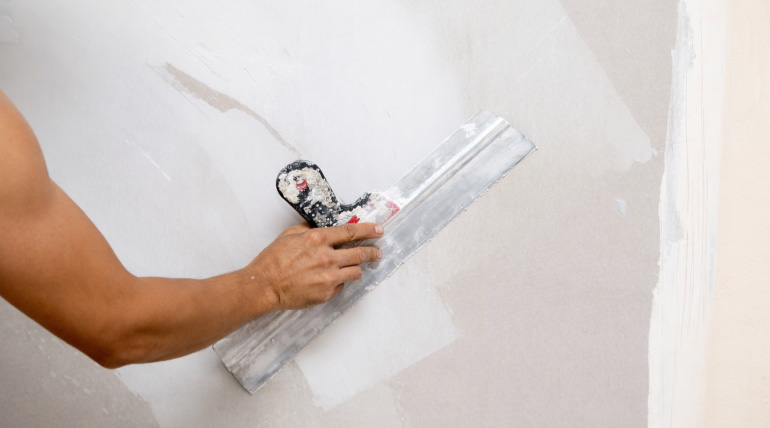
Gypsum Plaster
Advantages | Disadvantages |
Lightweight, reduces dead load | Not suitable for external or continuously wet areas |
Smooth, premium finish | Fast setting requires trained application |
Faster readiness for finishing work | Sensitive to moisture; needs dry storage |
Factory-controlled consistency | Higher material cost than cement plaster |
Low shrinkage, fewer cracks | Thickness is limited beyond recommended range |
Better site cleanliness and lower wastage | Machine spray needs skilled team (if used) |
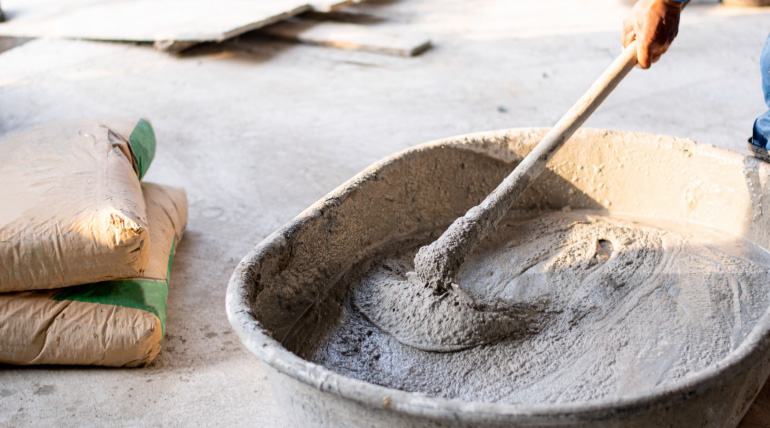
Sand–Cement Plaster
Advantages | Disadvantages |
Suitable for internal + external | Requires curing (water + labour + supervision) |
Works well in wet zones | Higher shrinkage crack risk |
Allows thicker build-up for uneven walls | Rough finish; typically needs putty |
Lower material cost | Labour-intensive and slower |
Durable in harsh conditions | Quality varies with site mixing |
Widely available | Adds higher dead load |
Why Builders Are Switching (Especially for Interior Walls & Ceilings)
1) Lightweight Material = Reduced Dead Load on Structure
One of the most significant advantages of gypsum plaster is its lower density compared to sand–cement plaster. With nearly half the weight, gypsum plaster contributes significantly less dead load to the building structure.
While plaster may seem like a minor component individually, across thousands of square metres in multi-storey projects, the cumulative weight difference becomes substantial. Reduced dead load can support better structural efficiency, optimized design calculations, and improved long-term performance of slabs and beams.
2) Better Finish with Less Finishing Correction
Gypsum plaster provides a naturally smooth surface. That means lower dependence on heavy wall putty layers just to correct unevenness and roughness. For interiors where visual finish matters, gypsum helps teams achieve consistent wall quality with fewer correction cycles.
3) Faster Project Flow for Interiors
Even if speed is not the only driver, it remains a major advantage. Gypsum plaster allows faster movement to painting and interiors compared to cement plaster, which requires curing and extended drying time. This helps in smoother coordination between trades—plaster, electrical finishing, painting, carpentry, and interiors.
4) Improved Indoor Comfort: Acoustic and Thermal Support
Gypsum plaster can improve indoor comfort in two ways:
• Acoustic performance: Gypsum’s microstructure can support better sound dampening than dense cement plaster. It is not a complete acoustic barrier by itself, but it contributes to reduced echo and improved indoor sound comfort when combined with good design practices.
• Thermal comfort: Lower density materials generally support improved insulation compared to dense cement layers, helping interiors feel more comfortable.
5) Consistency Across Units
Cement plaster quality can vary depending on sand quality, mixing ratios, water addition, and labour practices. Gypsum plaster—being factory processed—helps reduce variation and rework. On projects with hundreds of flats or repeated units, this consistency becomes a major advantage.
Where Sand–Cement Plaster Still Makes More Sense
Gypsum plaster is not a “one-material solution.” Cement plaster remains the better choice when:
• The surface is external and exposed to rain/heat cycles.
• The area is continuously wet, such as bathrooms (especially wet walls), balconies, and open-to-sky zones.
• The wall has significant undulation and needs thick build-up beyond gypsum’s recommended thickness range.
• The application demands higher robustness under harsh exposure.
A smart builder’s approach is simple: use gypsum where it is strongest (internal dry areas), and use cement where conditions demand it (external/wet).
Important Clarification on Water (So We Don’t Overclaim)
Gypsum plaster does use water for mixing/application. The key difference is that it does not need post-application curing like cement plaster. So, while gypsum can reduce overall site water usage by eliminating curing cycles, the main reason builders prefer it today is lightweight execution + finish + consistency, not water alone.
Focus on Lifecycle Value Rather Than Initial Cost
Experienced builders look beyond upfront material prices. Considering time savings, labour reduction, sustainable material and lower finishing costs, gypsum plaster often provides better project value over time.
Builders can now use standardized, ready-to-use gypsum plaster from trusted brands like Walplast instead of variable on-site mixes.