
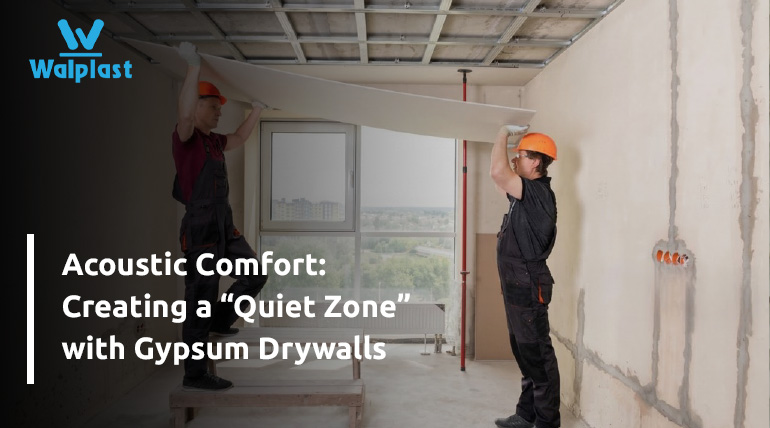
Today, comfort in a home goes beyond aesthetics and natural light—it’s also about how effectively the space controls noise. From traffic outside to television sounds in the next room or everyday household activities, unwanted noise can disrupt relaxation and concentration.
This is where gypsum boards truly stand out. Designed for superior acoustic performance, modern drywall systems help create quieter, more peaceful interiors—ideal for working, unwinding, and everyday living. In fact, gypsum boards have long been used in spaces like theatres, cinemas, and hotels, where sound control is critical, proving their effectiveness in delivering enhanced acoustic comfort.
Key Insights
● Enhanced Acoustic Comfort: Gypsum boards help create quieter interiors by reducing noise transfer between rooms and minimizing sound reflections within the space.
● Added Fire Safety: Along with acoustic benefits, gypsum boards also offer inherent fire resistance, enhancing overall safety.
● Limitations of Traditional Walls: Conventional brick walls often allow sound to travel easily, especially in apartments or open-plan homes with thinner partitions.
● High-Performance Systems: Double-layer drywall systems combined with insulation significantly improve Sound Transmission Class (STC) ratings, effectively reducing unwanted noise.
● Ideal for Home Offices: Drywall partitions are well-suited for modern home offices, enabling the creation of quiet, distraction-free workspaces.
● Aesthetic + Functional Advantage: Gypsum drywalls deliver both performance and aesthetics, offering effective sound insulation with a smooth, seamless finish.
● Lightweight & Flexible Construction: Compared to traditional masonry, drywall systems are faster to install, lightweight, and allow easy redesign or future space expansion.
The Noise Problem: Why Sound Travels So Easily
Brick or concrete walls are used to build many traditional homes. Even though these materials make structures stronger, they don’t always stop sound from getting through.
In fact, denser materials tend to allow smoother sound transmission, whereas the presence of voids or air gaps helps break this flow—improving sound insulation.
Buildings with thin stone walls, blocks, and open floor plans often make it easy for sound waves to move from one room to another.
Some common sources of noise inside are
● Conversations or television sounds from adjacent rooms
● Street traffic or construction noise from outside
● Kitchen appliances and household activity
● Echo or sound reflections in large open spaces
Sound waves move through things by vibrating them. These vibrations move quickly through walls that are thin or not well insulated, making spaces feel noisy and uncomfortable. This effect is especially clear in apartments, homes with open floor plans, and shared living spaces.

Decoupling Sound: How Gypsum Drywalls Reduce Noise?
One great thing about modern drywall systems is that they can cut down on sound transmission. Properly installed gypsum boards can significantly improve a wall’s Sound Transmission Class (STC) rating, which measures how well a structure blocks airborne sound.
A common approach involves building a double-layer gypsum partition with a cavity between the panels. Mineral wool or acoustic foam could be used as insulation in this space. In this design, the two sides of the wall are separated so that vibrations can’t easily pass through.
This process is often referred to as sound decoupling, and it improves acoustic performance in several ways:
● The air gap blocks the sound waves’ path.
● Insulation absorbs sound energy before it travels further.
● Multiple layers of boards micro voids, reducing vibration.
● The combined system creates effective soundproof walls that significantly lower noise transfer.
Products like Walplast GypEx gypsum boards are designed to be strong and reliable, making them ideal for both home and business drywall systems where good appearance and sound control matter.
Modern Home Offices: Turning Any Corner into a Quiet Workspace
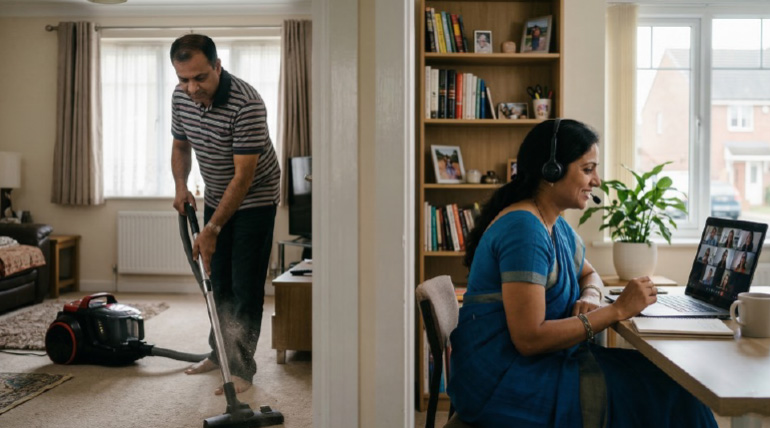
With more people working from home, it’s more important than ever to have quiet places in your home. The living room or bedroom is where many people now go to video meetings, online classes, or focused work sessions. Sadly, these places often don’t have soundproofing.
Installing drywall partitions made with gypsum boards offers a quick and efficient way to create a quiet home office without major construction work. Unlike traditional brick walls, drywall systems are lightweight and can be installed rapidly with minimal disruption.
A drywall wall can help turn a noisy corner into a quiet place to work by:
● Blocking outside noise and conversations from other rooms
● Reducing echo during video calls and recordings
● Creating a dedicated working area that feels separate from the rest of the house
● Improving overall acoustic comfort for better concentration/ Privacy
This method is also adaptable. It is much easier to change or add on to drywall walls than it is to change or add on to traditional masonry walls if the homeowners decide to change their layout in the future.
Seamless Finish: Performance with a Premium Look
While sound insulation is important, homeowners also want walls that look elegant and seamless. One of the standout benefits of drywall systems is the smooth finish they provide. Properly installed gypsum boards create surfaces that appear just as solid as traditional masonry walls.
Joints are treated with jointing compounds and finishing layers after they have been put in place. After painting, the wall becomes completely smooth, revealing no visible seams. The final product has both modern looks and good functionality.
Therefore, a well-thought-out gypsum drywall system can provide two major advantages at the same time:
● The visual appearance of a premium, solid wall
● The acoustic performance similar to spaces used in studios or conference rooms
Due to its good look and usefulness, drywall technology is becoming more popular in modern architecture and interior design.
Why Gypsum Drywalls Are Ideal for Acoustic Comfort?
For controlling noise and making the inside more comfortable, drywall systems are better than traditional building methods in a number of ways.
Key benefits include:
● Faster installation compared with brick masonry
● Better acoustic performance when designed with insulation layers
● Lightweight structures that reduce dead load on the building
● Smooth, seamless surfaces that enhance interior aesthetics
● Flexible layouts for modern homes and workspaces
For homeowners seeking quiet interiors without heavy structural work, drywall systems using gypsum boards by Walplast offer a practical and efficient solution.
Conclusion
Noise control is now an important part of living in comfort. There is a modern way to use drywall systems to make a quiet home office, a private entertainment room, or just a room with less noise.
Homeowners can greatly improve sound insulation and keep the look of their rooms modern by using layered walls, insulation cavities, and high-quality gypsum boards.
When installed correctly and with good materials, gypsum drywall can turn any room into a quiet, comfortable space that can be used for work, play, and everyday life.