
Choosing the right plastering material has a direct impact on project timelines, finishing quality, and overall construction cost. For decades, sand cement plaster dominated construction sites. Today, however, gypsum plaster is rapidly becoming the preferred choice for builders, contractors, and architects who prioritize efficiency, finish, and long-term performance.
This shift is not driven by trends. Builders are switching because gypsum plaster helps save water, time, and labour, while delivering superior surface quality and better lifecycle value.
Key Insights
• Gypsum plaster eliminates water curing, saving thousands of litres of water compared to sand cement plaster and supporting sustainable construction practices.
• Faster setting time (3–4 days vs. 21–28 days) allows projects to move quickly to painting and interiors, reducing overall construction timelines.
• Superior smooth wall finish minimizes the need for wall putty, lowering material usage and finishing labour.
• Lower labour and supervision requirements simplify site management and reduce dependency on curing-related manpower.
• Total construction cost savings are higher when water, labour, time, and finishing costs are evaluated together.
• Factory-processed consistency ensures predictable results across floors and units, reducing rework and quality variations.
• Alignment with green building material standards makes gypsum plaster suitable for compliance-driven projects.
Understanding the Two Materials
Before comparing performance, timelines, and costs, it is important to understand how sand cement plaster and gypsum plaster differ at a material level.
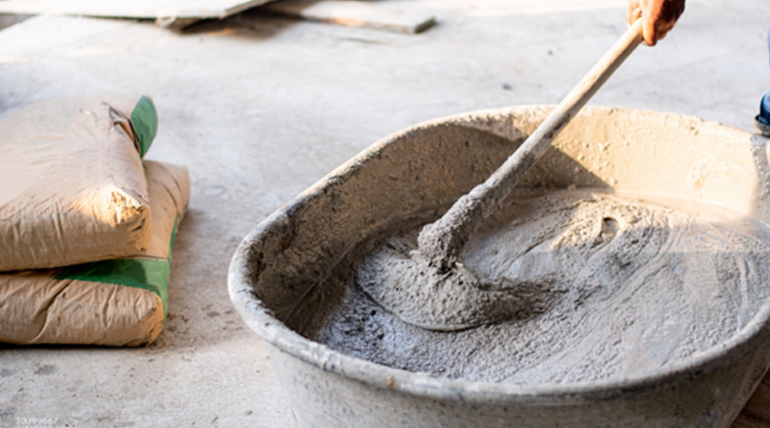
Sand cement plaster is a traditional on-site mix made from cement, sand, and water. It has been widely used for decades due to availability and familiarity, but its performance is highly dependent on labour skill, curing discipline, and site conditions.
Gypsum plaster, on the other hand, is a factory-processed dry mix made from calcium sulfate. It is designed for controlled application with water, offering a more predictable, efficient, and uniform plastering process.
Performance Characteristics That Matter in Modern Construction
Beyond speed and finish quality, plastering materials today are expected to support structural efficiency, safety, comfort, and correct application practices.
Lightweight Construction Advantage
Gypsum plaster is significantly lighter than sand cement plaster. This reduces dead load on the structure, making it particularly advantageous for high-rise buildings, renovation projects, and retrofits. Lower load contributes to better structural efficiency and optimised building design.
Fire Resistance and Safety
Gypsum plaster offers inherent fire-resistant properties due to the chemically combined water present in gypsum. During exposure to fire, this water is released as steam, slowing heat transmission. This enhances passive fire protection for internal walls and ceilings and supports modern fire safety requirements.
Sound Resistance and Indoor Comfort
In residential towers, offices, hospitals, hotels, and educational buildings, acoustic comfort is no longer optional. Gypsum plaster systems help reduce sound transmission between spaces, improving privacy and occupant comfort in high-density environments.
Designed for Internal, Moisture-Free Areas
Gypsum plaster is specifically engineered for internal, moisture-controlled environments such as living rooms, bedrooms, corridors, offices, and commercial interiors. When used in dry internal areas, it maintains surface integrity and dimensional stability over time.
For wet areas like bathrooms and kitchens, moisture-resistant gypsum systems or alternative materials should be specified to ensure durability.
Difference Between Gypsum Plaster and Sand Cement Plaster
1. Curing Requirement
Sand Cement Plaster
• Requires water curing for 21–28 days
• High water consumption
• Additional labour and supervision for curing
Gypsum Plaster
• No water curing required
• Eliminates water wastage
• Reduces labour dependency and site management effort
2. Setting Time and Project Speed
Sand Cement Plaster
• Slow strength development
• Painting and finishing delayed until curing is complete
Gypsum Plaster
• Sets and dries within 3–4 days
• Allows faster progression to painting and interior work
3. Finish Quality
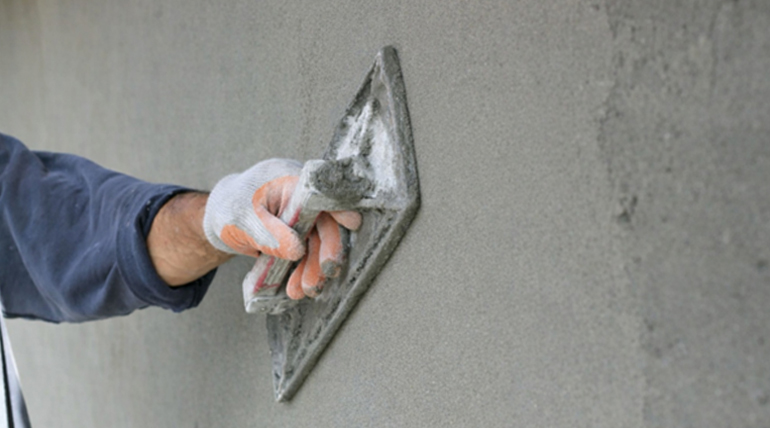
Sand Cement Plaster
• Rough and uneven surface
• Requires multiple layers of wall putty
• Higher finishing material and labour cost
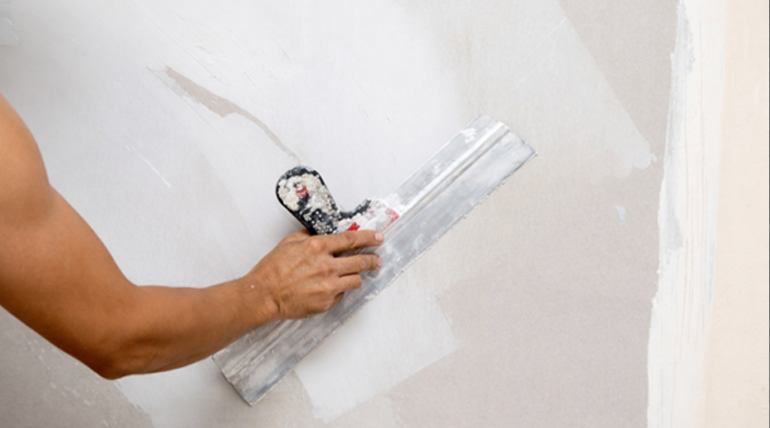
Gypsum Plaster
• Naturally smooth and uniform finish
• Reduces or eliminates heavy putty application
• Provides a superior base for paint and decorative finishes
4. Application Consistency
Sand Cement Plaster
• Mixed on site
• Quality varies with labour skill and proportions
Gypsum Plaster
• Factory-processed for uniform quality
• Predictable results across rooms and floors
5. Sustainability and Site Efficiency
Sand Cement Plaster
• High water consumption
• Greater material wastage
Gypsum Plaster
• Supports green building practices
• Cleaner sites with lower environmental impact
Why Smart Builders Are Switching
Modern construction demands speed, consistency, and efficiency. As project timelines tighten and resource costs rise, builders are re-evaluating traditional methods.
Faster Project Turnaround
Gypsum plaster significantly reduces the waiting period between plastering and finishing, enabling quicker handovers.
Reduced Water and Labour Dependency
Eliminating curing simplifies operations and reduces daily site management challenges.
Consistent and Superior Finish Quality
Factory-controlled manufacturing delivers uniform results and reduces rework.
Improved Site Efficiency and Cleanliness
Lower wastage and cleaner sites improve productivity and coordination across trades.
Alignment with Sustainable Building Practices
Lower water usage and reduced waste make gypsum plaster a responsible material choice.
Focus on Lifecycle Value Rather Than Initial Cost
When time, labour, water, and finishing costs are considered together, gypsum plaster delivers better long-term value.
Builders today are increasingly choosing standardized, ready-to-use gypsum plaster solutions from trusted manufacturers instead of variable on-site mixes.
Conclusion
The choice between gypsum plaster and sand cement plaster comes down to efficiency, performance, and longevity. While sand cement plaster remains a traditional solution, it requires more water, time, and finishing effort—factors that slow modern construction.
Gypsum plaster accelerates project completion, delivers superior finish quality, reduces resource dependency, and supports safer, lighter, and more comfortable interior environments.
Smart builders are moving beyond conventional practices and focusing on materials that perform consistently over time. In that context, gypsum plaster is emerging as a practical, future-ready choice for modern construction.